



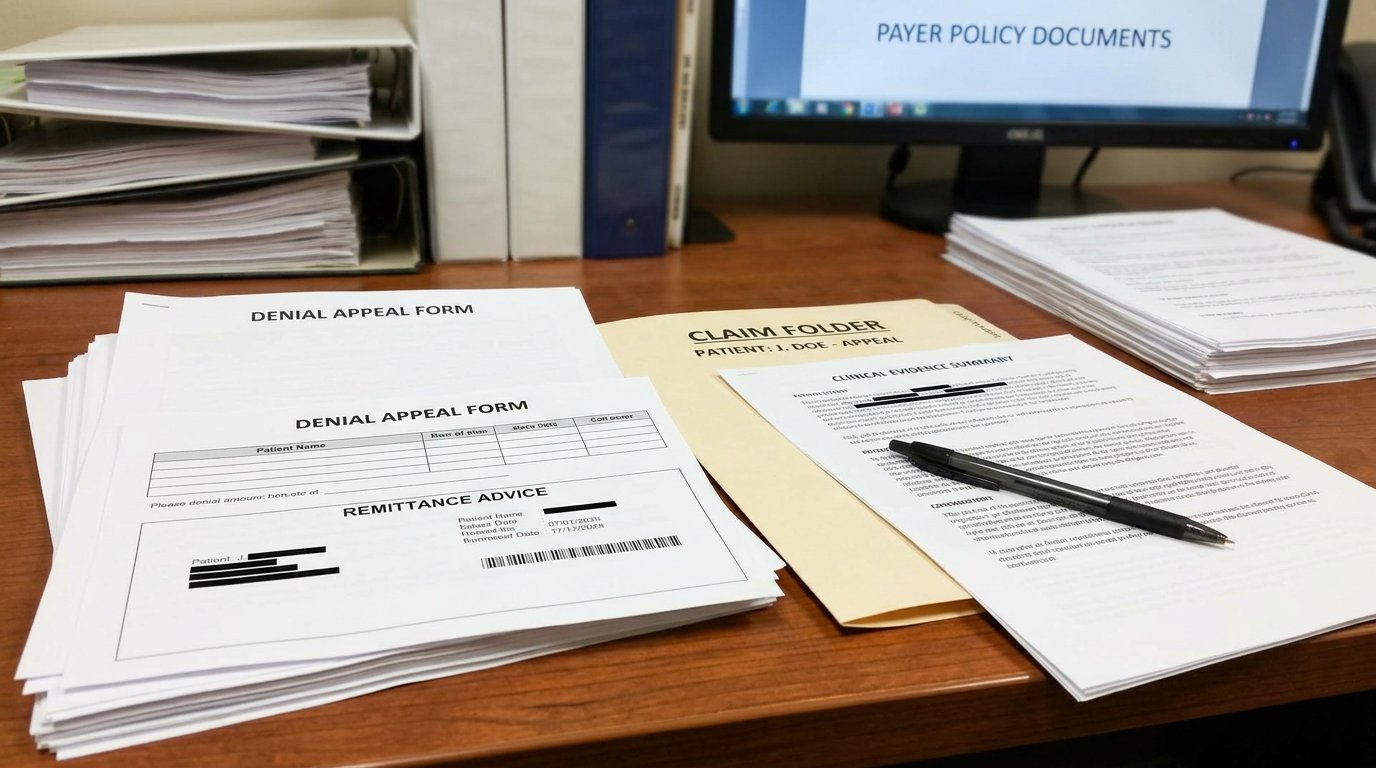


To capture secondary billing revenue, you’ll need to identify coordination of benefits at intake, verify eligibility through real-time X12 271 transactions, and automate claim routing so secondary submissions aren’t missed. Most facilities lose this revenue due to registration errors, missing EOB documentation, and inconsistent payment posting, not inadequate care. Automation alone can reduce claim errors by up to 30% and denials by up to 40%. Below, you’ll find the exact steps to close these gaps across your entire workflow.
Why Behavioral Health Misses Secondary Billing

When a behavioral health facility fails to collect secondary insurance revenue, the root cause is rarely a single billing error, it’s a compounding set of operational gaps that start well before a claim is ever submitted. You’re dealing with carve-out complexity where managed behavioral health organizations enforce separate credentialing and claims rules from primary carriers. When your billers aren’t trained on these distinctions, secondary payer behavioral health claims never get submitted correctly, or at all.
Inaccurate payment posting compounds the problem, hiding missing secondary claims in your accounts receivable. Without structured follow-up workflows, your team assumes primary processing is final. Add insufficient coordination of benefits identification at intake, and you’ve built a system that structurally prevents secondary revenue from being captured. Once a claim exceeds the payer’s filing window, typically 90 to 180 days from the date of service, that secondary revenue becomes permanently unrecoverable, turning operational delays into irreversible write-offs.
How Unfiled Secondary Claims Drain Your Revenue
Every unfiled secondary claim represents revenue your facility has already earned but never collected. In secondary billing behavioral health settings, these losses compound quickly across your census. When you don’t submit to the secondary payer, you absorb the patient’s remaining balance, or write it off entirely.
Every unfiled secondary claim is revenue already earned but never collected, losses that compound silently across your entire census.
The financial impact follows a predictable pattern:
- Registration errors misidentify coordination of benefits, so secondary claims never generate.
- Missing EOB documentation from primary payers triggers automatic denials on the secondary claims you do file.
- No systematic follow-up process means denied secondary claims sit unworked while timely filing deadlines expire.
Each leak is preventable. You recover this revenue by fixing the process, not by working harder on individual claims. Collecting at the time of service yields a 90% recovery rate of patient responsibility, compared to just 60% when billing after the visit, making it critical to address remaining balances before secondary filing gaps widen further.
Why Secondary Claims Are So Hard to Track

Secondary claims force your billing team to navigate multiple payer systems, each with its own portals, submission rules, and timely filing deadlines, and behavioral health carve-outs to third-party administrators like Optum and Carelon fragment that process even further. When payer-specific rules shift or update without clear notice, claims that were compliant last month can trigger denials this month, making consistent tracking a moving target. Add in eligibility verification gaps at intake, missing secondary coverage details, inaccurate coordination of benefits data, or incomplete consent documentation, and you’re building tracking workflows on a foundation that’s already compromised. Much like how claims adjudicators assess claims fairly while collaborating with providers to optimize outcomes, billing teams need structured coordination across payers to prevent secondary claims from falling through the cracks.
Multiple Payer Complexity
Behavioral health billing operates under a layer of coding, documentation, and coverage rules that make tracking secondary claims considerably harder than in most other medical specialties. When you’re managing secondary insurance claims across multiple payers, you’re traversing distinct requirements simultaneously.
- Granular coding demands: Time-based CPT codes, psychotherapy add-ons paired with E/M codes, and payer-specific modifier requirements mean each secondary claim must match the exact billing logic that payer expects, not what the primary accepted.
- Documentation disparities: Secondary payers often require different medical necessity documentation than the primary, and submitting the primary’s format won’t suffice.
- Coverage variation: Carve-out behavioral health plans, session limits, and pre-authorization rules differ by payer, making standardized secondary billing workflows nearly impossible without payer-specific tracking systems.
Shifting Rules Complicate Tracking
Even when your team understands the multiple-payer complexity described above, the rules governing those payers don’t hold still long enough for static workflows to keep up. Medicare’s telehealth requirements updated January 31, 2026, now trigger automatic claim denials with no appeal path for non-compliant submissions. Commercial payers are shortening authorization windows and eliminating retroactive approvals, directly complicating secondary claim submission timelines.
Denial reasons are shifting from “service not covered” to “documentation insufficient,” requiring your team to track payer-specific clinical policy bulletins in real time. Payer AI systems are flagging time-based coding patterns, increasing denial rates on claims that previously processed without issue. Each regulatory change creates a downstream secondary billing impact, and if your tracking processes aren’t updating at the same pace, you’re losing revenue systematically.
Eligibility Verification Gaps
Most secondary claim denials trace back to a single upstream failure: your team didn’t verify, or couldn’t accurately verify, the patient’s eligibility before the claim went out. These eligibility verification gaps compound quickly when coordination of benefits behavioral health protocols aren’t established at intake.
Three verification failures drive the majority of secondary claim denials:
- Active coverage lapses, A patient’s COBRA terminated two weeks prior, but your EHR still shows active status. Claims submitted against inactive policies deny automatically.
- Unresolved COB sequencing, Medicare is primary and BCBS is secondary, but unresolved coordination triggers BCBS rejections before your secondary claim is even reviewed.
- Carve-out misrouting, Behavioral health claims require submission to a third-party administrator like Optum, not the primary medical carrier.
Catch Secondary Payers at Intake

How often does secondary coverage go unidentified simply because no one asked the right questions at intake? You need a structured screening process, not assumptions, to capture secondary insurance addiction treatment revenue. Start by photocopying both sides of every insurance card and running eligibility checks through X12 271 transactions to confirm payer hierarchy.
Use sequential questionnaires like the CMS MSP Intake Tool to identify group health plans, workers’ compensation, no-fault insurance, and liability coverage. Under 42 CFR § 489.20(f), you’re required to document all other payer information for Medicare beneficiaries. Skipping this step violates your provider agreement.
Disclose out-of-network status with secondary payers during intake. This manages patient expectations and prevents downstream claim surprises that stall reimbursement.
Automate Secondary Claims So Nothing Goes Unfiled
Manual secondary claim workflows bleed revenue through missed filings, delayed submissions, and human error, problems that automation eliminates at the system level. Modern behavioral health EHRs integrate clearinghouses that forward EOBs and route claims directly to secondary payers without manual intervention, streamlining COB behavioral health billing end to end.
To implement effective automation, follow these steps:
- Connect your EHR to your clearinghouse so ERA auto-posting triggers secondary claim generation immediately after primary processing completes.
- Enable real-time eligibility checks that validate secondary coverage, authorizations, and visit limits before every submission.
- Activate automated claim scrubbing to catch missing codes, modifiers, and documentation, reducing claim errors by up to 30% and denials by up to 40%.
What a Behavioral Health RCM Partner Finds That You Can’t
Even when your internal team automates secondary claim workflows, a specialized behavioral health RCM partner uncovers revenue leaks that in-house staff don’t have the bandwidth, coding depth, or payer intelligence to catch.
An RCM partner analyzes denial patterns across your secondary claims, identifying root causes like incorrect level-of-care coding or missing NPIs that suppress reimbursement. They benchmark your medicare secondary billing mental health recovery rates against industry standards, flagging underpayments tied to MHPAEA parity violations.
Your RCM partner catches the underpayments and denial patterns your internal team doesn’t have time to trace.
Their payer contract expertise reveals where secondary carriers consistently underpay relative to contractual obligations. They track authorization expirations that trigger preventable denials and maintain clean claim rates between 97, 99%.
You’re running a facility. They’re recovering the revenue you’ve already earned.
Call Now and Simplify Your Billing Process
Revenue challenges should never distract you from the work that matters most. At Arise Billing Solutions, our experienced U.S.-based team manages your entire billing cycle with accuracy, transparency, and integrity. Call +1 (747) 256-6600 today and let us help you take control of your revenue.
Frequently Asked Questions
Can Secondary Billing Apply When the Primary Payer Fully Covers the Claim?
Yes, secondary billing can still apply even when primary covers the claim fully. You’ll need to check your secondary payer’s specific requirements, Medicaid, for example, mandates claim submission regardless of primary payment status. However, COB rules prevent total reimbursement from exceeding 100% of billed services, so you’ll likely receive a $0 payment from the secondary. You should verify each plan’s submission requirements during intake to avoid unnecessary denials and guarantee compliance.
How Long Do Facilities Have to Submit Secondary Claims After Primary Payment?
Most secondary payers give you 90 to 180 days from the primary payment date to file, though timelines vary by carrier and state. You’ll need to check each payer’s specific filing limit during VOB. Note that Blue Cross Blue Shield requires you to wait at least 30 calendar days after Medicare’s remittance date before submitting, claims filed earlier than that receive automatic denials. Track every deadline systematically to avoid forfeiting recoverable revenue.
Does Secondary Billing Change if the Patient Switches Insurance Mid-Treatment?
Yes, it changes considerably. When a patient switches insurance mid-treatment, you’ll need to re-determine the coordination of benefits order immediately. You can’t bill the old secondary until you’ve confirmed the new hierarchy and obtained an updated EOB from the new primary. Update your EHR demographics right away, verify eligibility with both old and new insurers, and document the life event triggering the switch to support correct claim submission and avoid denials.
Are Secondary Payers Required to Cover Services the Primary Payer Denied?
No, secondary payers aren’t required to cover services your primary payer denied as non-covered. If the primary denied because the service falls outside its benefit scope, the secondary typically mirrors that exclusion and rejects the claim as well. However, if the primary denied due to benefit exhaustion, not non-coverage, your secondary payer may step in and pay. You’ll need to include the primary’s denial reason and EOB documentation when submitting.
What Happens to Secondary Claims When Coordination of Benefits Disputes Arise?
When coordination of benefits disputes arise, your secondary claims enter a hold status until the primary payer determination is resolved. You can’t submit secondary claims until the primary claim reaches final adjudication, and your timely filing clock doesn’t start until that happens. You’ll need to halt secondary submissions, monitor the dispute’s progress, and guarantee your team documents the resolution timeline to protect your filing rights and prevent revenue loss.