



To appeal a denied behavioral health claim, start by identifying the exact denial reason using CARC and RARC codes on your remittance advice. Then build your evidence package with DSM-5 criteria, symptom severity scores, treatment history, and ASAM dimension scores that map directly to your payer’s coverage criteria. Cite the Mental Health Parity and Addiction Equity Act in your appeal letter to challenge any disparate treatment. If the insurer upholds its denial, escalate to external review, where behavioral health claims have a 54% overturn rate. Each step in this process carries specific strategies that can dramatically improve your outcome.
Know Why Your Behavioral Health Claim Was Denied
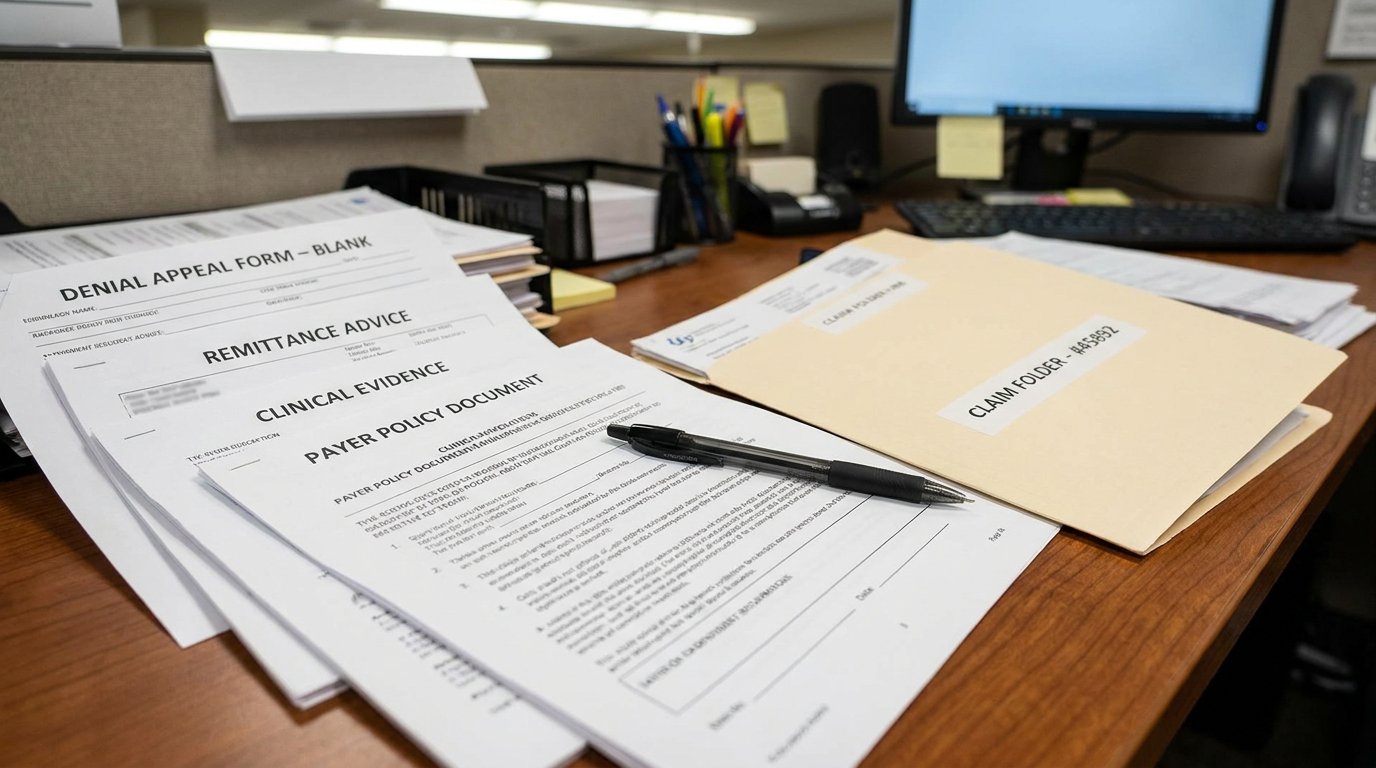
Every denied behavioral health claim carries a specific reason code, and understanding that code is the difference between recovering revenue and writing it off. A CO-16 signals insufficient documentation. A PR-49 points to a diagnosis-procedure mismatch. Medical necessity denials require an entirely different behavioral health claim appeal strategy than eligibility rejections. Best practices for revenue cycle management involve tracking and analyzing denial patterns to make informed adjustments.
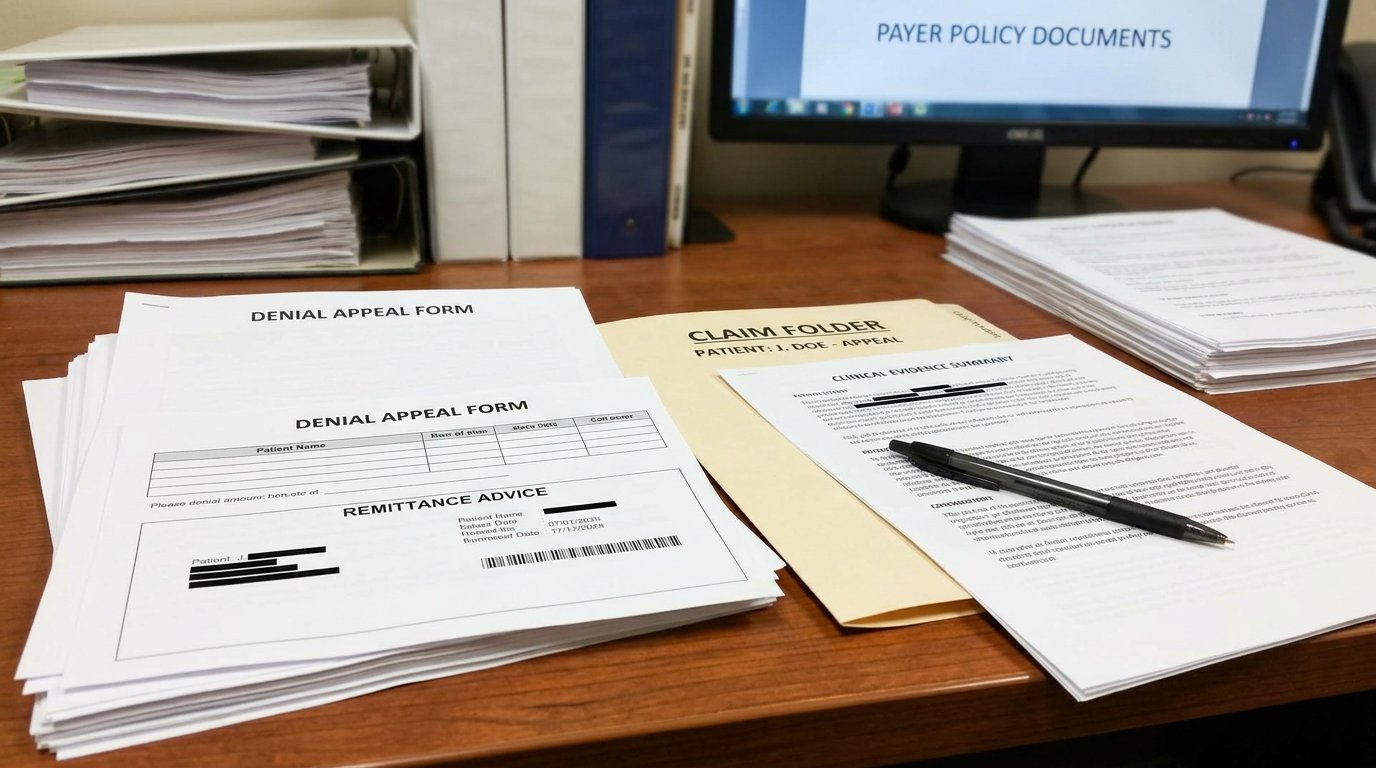
Don’t stop at the denial code. Pull the remittance advice, review the specific remark codes, and cross-reference them against the original claim. When you appeal a denied mental health claim, you need to address the exact deficiency, whether that’s missing start/stop times on a 90837, an expired authorization, or progress notes lacking quantified symptom severity. Precision here determines whether your appeal succeeds or fails. Many denials stem from eligibility verification failures before services are rendered, making it critical to confirm coverage details and benefits in advance so your appeal can demonstrate that proper steps were taken.
Decode Your Behavioral Health Denial Letter First
When a behavioral health claim denial lands in your inbox, the letter itself contains every clue you need to build a winning appeal, but only if you know how to read it systematically. Start with the header: member ID, claim number, dates of service, and the filing deadline printed in the upper corner. Next, locate the specific denial reason, standardized CARC and RARC codes paired with the cited policy provision. Remember that denial is not the final decision, so approach the letter as a strategic document rather than a defeat.
In the denial appeal process behavioral health facilities often overlook, check for errors: overstated exclusions, mismatched CPT/POS codes like H0019 billed with POS 21 instead of 55, or cherry-picked clinical records. Document every discrepancy. These findings become the foundation of your claim denial appeal letter and dictate your strongest reversal strategy.
Build an Evidence Package That Wins the Appeal
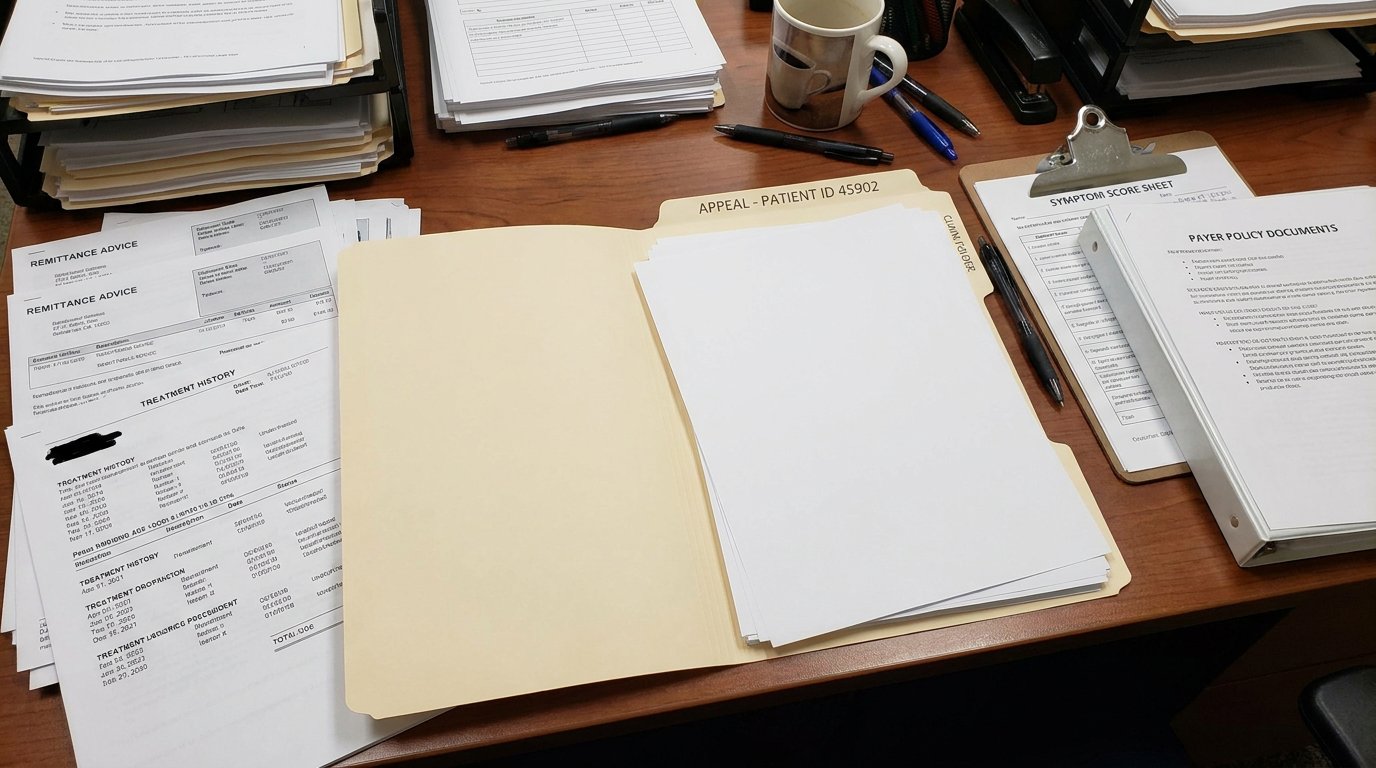
The strongest behavioral health appeals don’t succeed on argument alone, they succeed on evidence. When figuring out how to appeal a denied behavioral health claim, you need documentation that directly addresses the payer’s stated reason for denial. Documentation essentials for behavioral health billing are crucial for establishing a strong case. Comprehensive records can help clarify the justification for services rendered and demonstrate medical necessity.
| Evidence Type | What to Include |
|---|---|
| Clinical Documentation | DSM-5 criteria met, symptom severity scores (PHQ-9, GAF), functional impairment examples |
| Treatment History | Prior treatment attempts, outcomes, and clinical progression timeline |
| ASAM/Criteria Alignment | Dimension scores with rationale explaining why lower-intensity care isn’t appropriate |
| Payer Policy Match | Direct mapping of clinical presentation to the plan’s coverage criteria |
| Risk Assessment Data | Documented safety concerns, hospitalizations, and behavioral escalation patterns |
Every insurance appeal for behavioral health should include direct quotes from clinical records with dates and measurable data points, not summaries. To strengthen your case further, cite authoritative clinical guidelines such as MCG, InterQual, LCD, or NCD criteria that validate the medical necessity of the denied service.
File Your Internal Appeal With Parity Law on Your Side
Because the Mental Health Parity and Addiction Equity Act (MHPAEA) requires insurers to cover behavioral health services on equal terms with medical and surgical benefits, a denied behavioral health claim may itself constitute a parity violation, and your internal appeal should say so directly.
To strengthen your denial appeal addiction treatment facilities should:
- State the violation explicitly, open your appeal letter with “This denial violates MHPAEA parity requirements” and cite 45 CFR §146.136.
- Compare benefits side-by-side, document disparities like 20 approved physical therapy visits versus 12 denied therapy sessions.
- Submit within deadlines, file within 60, 180 days using certified mail or portal with confirmation.
- Reference provider support, include clinical documentation using ASAM or InterQual criteria to support your behavioral health claim overturn.
Escalate to External Review When the Insurer Won’t Budge
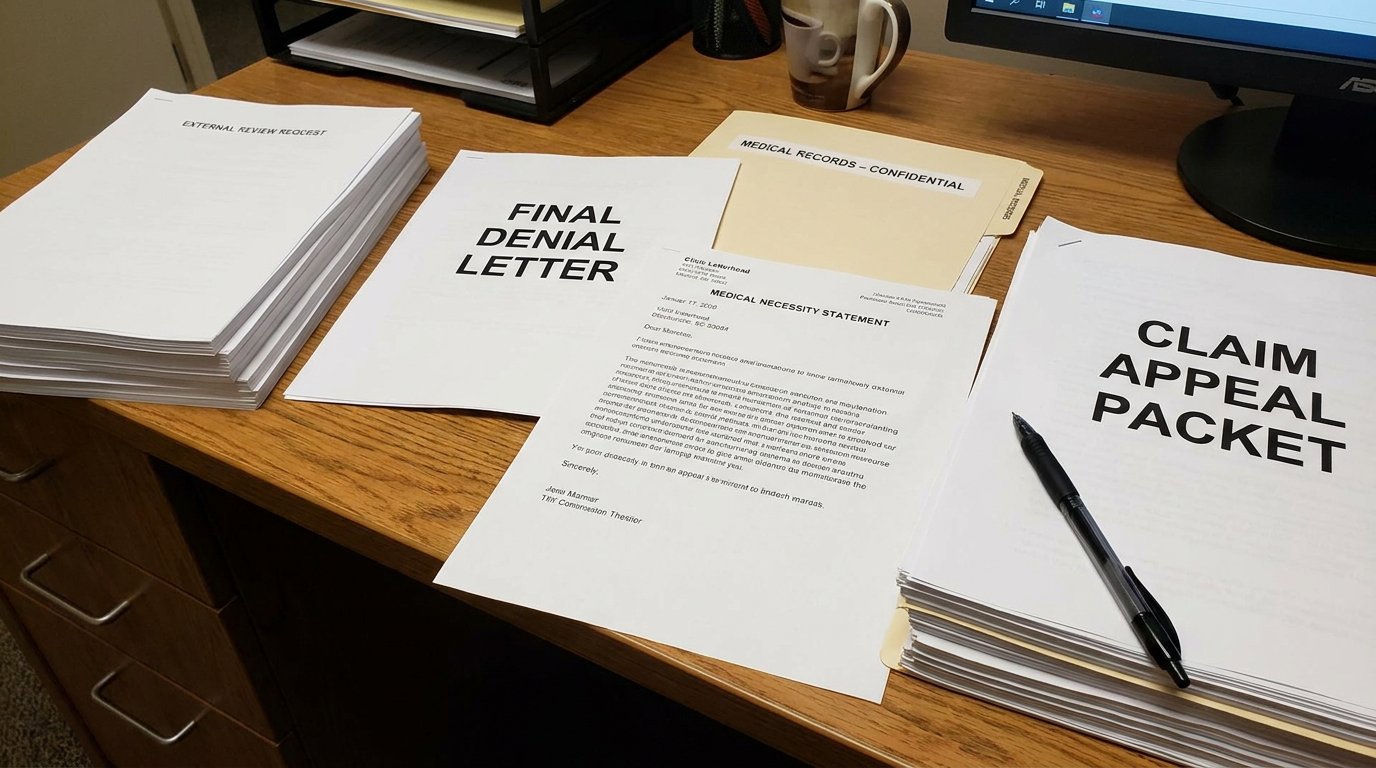
Even with MHPAEA parity arguments and strong clinical documentation backing your internal appeal, insurers sometimes issue a final denial, and that’s not where the process ends. You can escalate to an independent external review through your state’s Department of Insurance or the federal process, and mental health claims achieve a 54% overturn rate at this stage.
File within 120 days of your final internal denial. Include the denial letter, medical records, a medical necessity letter with DSM-5 criteria, and functional impact documentation. If you’ve already attempted a peer to peer review behavioral health discussion without success, reference that outcome explicitly. Timely filing deadlines in behavioral health are crucial to ensure that claims are processed without unnecessary delays. Missing these deadlines can lead to denied claims, which may complicate your access to necessary care.
Strong behavioral health denial management means treating external review as a built-in step, not a last resort.
Call Now and Simplify Your Billing Process
Revenue challenges should never distract you from the work that matters most. At Arise Billing Solutions, our experienced U.S.-based team manages your entire billing cycle with accuracy, transparency, and integrity. Call +1 (747) 256-6600 today and let us help you take control of your revenue.
Frequently Asked Questions
Can I Appeal a Denied Behavioral Health Claim After the Filing Deadline Has Passed?
Generally, no, once you’ve missed the filing deadline, you lose your appeal rights. ERISA plans strictly enforce the 180-day window, and missing it blocks even federal court challenges. However, you should check for narrow exceptions: MassHealth, for example, may accept late appeals if the denial resulted from payer error. Contact your payer directly, request reprocessing for correctable mistakes, and document everything. Going forward, track every denial immediately to avoid losing appealable claims.
Does My Therapist or Psychiatrist Need to Participate in the Appeal Process?
Not always, but their involvement strengthens your appeal considerably. You can file internal appeals yourself through your health plan’s member services without your therapist’s participation. However, if your denial involves medical necessity, you’ll want your provider to prepare evidence-backed appeal letters, submit clinical notes, and potentially participate in peer-to-peer reviews with the payer’s medical director. For out-of-network therapists, you’ll typically handle claims independently since they aren’t obligated to participate.
How Long Does an External Independent Review Organization Typically Take to Decide?
An IRO typically takes 45 days from receiving your request to issue a standard decision, though straightforward cases may wrap up in 30 days. If your situation’s urgent, meaning a delay could seriously jeopardize your health, you can request expedited review, and the IRO must decide within 72 hours. Studies show roughly 47% of external reviews overturn the insurer’s denial, so don’t skip this step if your internal appeals haven’t succeeded.
Will Appealing a Denied Claim Affect My Future Coverage or Insurance Premiums?
No, appealing a denied claim won’t affect your future coverage or premiums. Federal laws like MHPAEA, ERISA, and the ACA specifically protect you from retaliation, coverage rescission, or premium increases for exercising your appeal rights. Studies published in *Psychiatric Services* and data from NAMI confirm zero documented instances linking appeals to negative coverage outcomes. Insurers can’t legally use your appeal history in underwriting or claims processing decisions going forward.
Can I Hire a Professional Advocate to Handle My Behavioral Health Appeal?
Yes, you can hire a professional advocate to handle your behavioral health appeal. State-funded offices like the Office of Behavioral Health Advocacy provide free assistance, while private law firms specializing in mental health insurance advocacy offer fee-based representation. These advocates investigate denials, draft appeal letters, navigate peer-to-peer reviews, and represent you at hearings. They’ll track filing deadlines and build evidence-based cases, greatly enhancing your chances of overturning the denial.