



To submit clean behavioral health claims and protect your revenue, you’ll need to verify patient eligibility 24, 48 hours before each appointment, secure prior authorizations with complete clinical justification, and match CPT codes precisely to session type and duration. Document medical necessity with objective findings tied to specific diagnoses, then run every claim through automated scrubbing tools before submission. Each of these steps addresses a common denial trigger you can systematically eliminate from your workflow.
The Top Reasons Behavioral Health Claims Get Denied

When a behavioral health claim gets denied, the reason almost always traces back to one of five categories: insufficient medical necessity documentation, incomplete or inaccurate supporting information, authorization and level-of-care gaps, incorrect coding and billing errors, or timely filing violations. Each category represents a breakdown in the claim submission process mental health facilities must control to protect revenue.
Understanding these five categories isn’t optional, it’s the foundation of every clean claim behavioral health strategy. Payers in 2026 use AI-driven review to flag weak documentation, duration mismatches, and missing authorizations before claims ever reach adjudication. If your behavioral health claim submission workflow doesn’t address each category systematically, you’re building denial volume into your operation from the start. Facilities that adopt proactive and systematic approaches to addressing each denial category consistently see improved reimbursement rates and reduced revenue leakage over time.
Verify Patient Eligibility Before Every Appointment
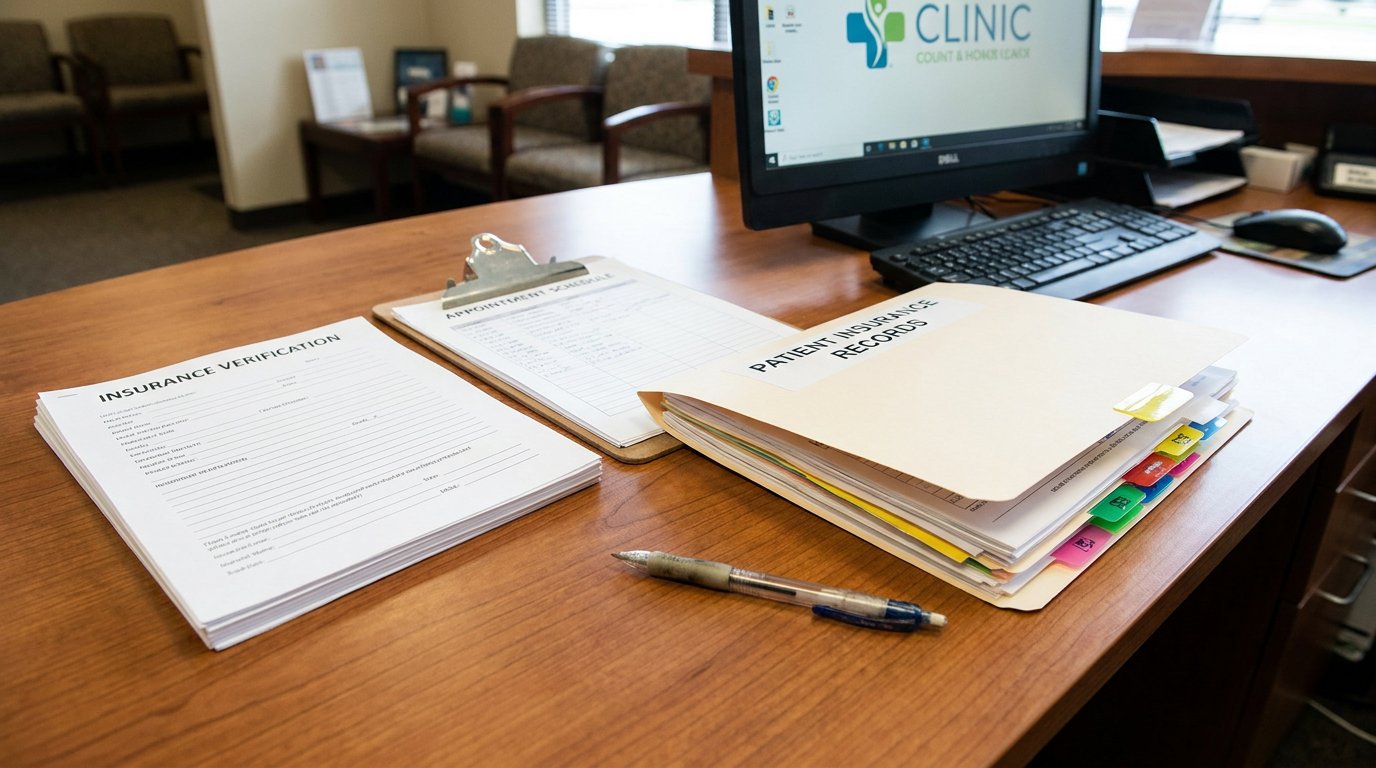
Because eligibility failures account for a significant share of behavioral health claim denials, verifying patient insurance coverage before every appointment isn’t a courtesy step, it’s a revenue protection requirement. You should confirm active policy status, member ID, copay amounts, deductible status, and prior authorization requirements at least 48 hours before each scheduled visit. Documentation best practices for billing are essential to minimize errors and ensure timely payments. Implementing these practices can significantly streamline the billing process and reduce the likelihood of disputes.
For claim submission addiction treatment facilities, re-verify coverage 24-48 hours before the appointment and again at check-in. Capture plan type, policyholder relationship, and behavioral health-specific referral requirements at every touchpoint. Use automated eligibility tools within your EHR or payer portals to minimize manual errors. This systematic verification directly improves your clean claim rate behavioral health metrics and prevents downstream claim tracking behavioral health complications that drain administrative resources. With the rise of high deductible health plans, understanding each patient’s financial responsibility upfront also enables proactive collection of payments and enhances the overall financial health of your practice.
Get Prior Authorization Right the First Time

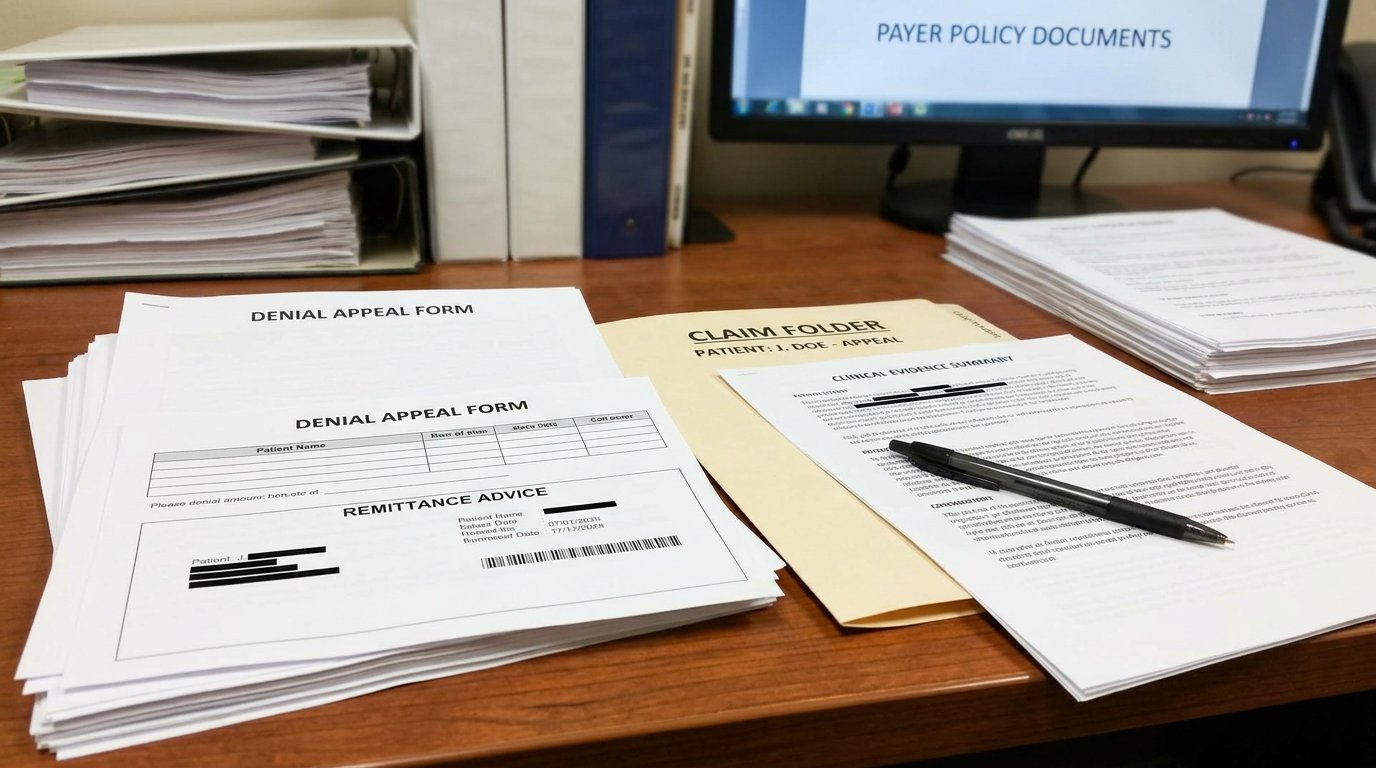
Failed prior authorizations are one of the most preventable, and most costly, causes of claim denials in behavioral health billing. Before submitting any PA request, review the payer’s policy documents to confirm which CPT codes behavioral health claims require authorization for, then note the payer-assigned authorization number and expiration date.
Submit complete, accurate forms with detailed clinical justification, including failed prior treatments and progress notes, through the payer’s preferred method. For effective claim management addiction treatment facilities need systematic tracking of every PA request, including submission dates, representative names, and outcomes. Work closely with the doctor’s office representative who handles PAs, as they can offer guidance on past successful requests that may serve as a template for your submissions. Renew approvals at least 30 days before expiration. If denied, appeal immediately with additional evidence, over 80% of Medicare Advantage denials are overturned on appeal.
Document Medical Necessity Payors Can’t Dispute
Even with clean claims and valid authorizations, payers will deny reimbursement if your documentation doesn’t establish medical necessity in terms they can verify against their own coverage criteria. You need clinical justification that directly links each diagnosis to the specific services rendered, supported by treatment plans detailed enough to withstand utilization review scrutiny. Getting this right means tightening three areas of your documentation process: clinical justification best practices, treatment plan specificity, and the explicit connection between diagnosis codes and the services you’re billing.
Clinical Justification Best Practices
The clinical justification you embed in your documentation is the single factor that determines whether a payer accepts, questions, or denies a claim for medical necessity. Every note must link the patient’s diagnosis directly to the billed service, establishing why the treatment’s type and intensity match the condition’s severity.
Strong behavioral health billing management requires objective evidence, functional limitations, risk assessments, failed conservative treatments, and measurable clinical findings, not vague narrative. Document the specific clinical decision-making that justified each service on the date it occurred. Avoid generic templates or copy-pasted language that doesn’t reflect the individual patient’s presentation.
Your documentation should pass a simple test: would an independent third-party reviewer, reading only the clinical record, reach the same conclusion about medical necessity that you did?
Strengthening Treatment Plan Documentation
Because payers evaluate medical necessity based entirely on what’s documented, not what was clinically observed but left unwritten, your treatment plan documentation must build an airtight case from the first assessment through every subsequent update.
Your initial assessment should link symptoms directly to DSM-5 criteria, describe functional impairments, capture baseline measures like PHQ-9 or GAD-7, and justify both the intervention type and session frequency.
Treatment plans must translate symptoms into measurable goals, updated every three months minimum. Stale or generic plans trigger denials.
For reauthorizations, demonstrate persistent diagnostic criteria, document remaining functional impairments with specific examples, and explain continuation rationale even when progress plateaus.
Every progress note should reference treatment plan goals, include clinical rationale for ongoing frequency, and outline next steps with forward-looking specificity.
Linking Diagnosis To Services
When your diagnosis codes don’t directly support the services billed, payers won’t hesitate to deny the claim, regardless of how clinically appropriate the treatment actually was. Every procedure code must map to a specific ICD-10-CM diagnosis that establishes medical necessity within the payer’s coverage parameters.
| Requirement | Action |
|---|---|
| Code specificity | Assign ICD-10-CM codes to the highest level; avoid unspecified codes |
| Diagnosis-procedure alignment | Match each CPT/HCPCS code to its supporting diagnosis |
| Clinical rationale | Document how treatment improves outcomes or prevents deterioration |
| Prior treatment context | Cite previous treatment failures justifying current interventions |
| Payer policy alignment | Cross-reference local coverage determinations before submission |
Review payer claim edits proactively to identify automated denial triggers tied to code mismatches before claims ship.
Match CPT Codes to Behavioral Health Services Accurately
Selecting the correct CPT code for each behavioral health service isn’t a matter of approximation, it requires exact alignment between the service delivered, the time spent, and the code billed. For psychotherapy, you must match session duration precisely: 90832 covers 16, 37 minutes, 90834 covers 38, 52 minutes, and 90837 applies at 53 minutes or more. Billing outside these ranges constitutes upcoding or undercoding.
For collaborative care, use 99492 for the initial month’s first 70 minutes and 99493 for subsequent months’ first 60 minutes. Add 99494 only when documented time exceeds those thresholds by 30 minutes. Screening codes like 96127 require completed standardized instruments with scored results. Every code you submit must reflect exactly what your documentation supports, nothing more, nothing less.
Scrub Behavioral Health Claims Before You Submit

Before you submit a single claim, you need a scrubbing process that catches coding errors, missing data, and payer-specific requirements that would otherwise trigger denials and force costly rework cycles. Automated claim scrubbing tools integrated with your EHR flag issues like invalid modifiers, mismatched diagnosis codes, and absent authorization details in real time, but you shouldn’t rely on automation alone, pair it with manual review checkpoints to catch nuances that algorithms miss. Regular audits of your scrubbing process let you track clean claim rates, identify recurring error patterns, and tighten your workflows so fewer mistakes reach payers in the first place.
Catch Errors Before Submission
Every claim you submit carries a single chance to get paid without delay, scrubbing that claim before it leaves your system is the difference between first-pass acceptance and a costly cycle of denials, corrections, and resubmissions. Claim scrubbing catches missing authorizations, invalid CPT codes, incorrect modifiers, and documentation gaps before payers ever see them.
Start by verifying patient demographics and insurance eligibility. Cross-check diagnosis codes against current ICD-10 standards for behavioral health conditions. Confirm CPT/HCPCS codes match the session type and duration. Review modifiers for group versus individual counseling, telehealth services, and prolonged encounters. Validate place of service codes, office versus virtual visits trigger different payer rules.
You’re not just checking boxes. You’re preventing revenue loss at the point where it’s cheapest to fix.
Automate Claims Scrubbing Tools
Manual scrubbing catches errors, but it doesn’t scale, and in behavioral health billing, where a single facility may generate hundreds of claims per week across residential, PHP, IOP, and outpatient levels of care, manual review alone can’t maintain the consistency or speed that clean claim rates above 95% demand.
Automated scrubbing tools validate claims against payer-specific rules before submission. AI-powered engines like ENTER.Health apply real-time CPT/ICD validation, anomaly detection, and payer feedback loops that evolve with each denial pattern. CureAR automates mental health-specific edits, while OmniMD delivers instant feedback on missing modifiers and authorizations for outpatient behavioral health settings. Platforms like Athenahealth adapt scrubbing logic based on payer behavior and provider history. These tools consistently push clean claim rates above 98%, reducing rework and accelerating reimbursement without adding headcount.
Audit Coding For Accuracy
Even with automated scrubbing tools catching formatting errors and missing fields, coding accuracy remains a human judgment problem, and in behavioral health, the margin for error is razor-thin.
You need to verify ICD-10 diagnosis codes match the services billed, confirm CPT time-based distinctions like 90834 versus 90837 reflect actual session duration, and validate that modifiers for telehealth and E/M with psychotherapy add-on codes are applied correctly. Cross-check that provider credentials support the specific services billed, an LMSW billing 90791 will trigger denials with certain payers.
Run routine internal audits targeting your highest-risk code categories: time-based psychotherapy, telehealth place-of-service codes, and group therapy documentation. Analyze denial patterns to identify recurring coding gaps, then feed those findings directly into staff training and process corrections.
Audit Denied Claims and Build a Resubmission Workflow
Denied claims don’t just represent delayed revenue, they expose the exact points where your billing operation is breaking down. With behavioral health claims denied 85% more often than general medical claims, you can’t afford to treat denials as one-off problems. Each denied claim costs $25, $118 in staff time to rework.
Build a structured resubmission workflow. Start by analyzing CARC and RARC codes to identify the specific root cause. Verify patient eligibility, confirm prior authorizations, and update provider credentialing before resubmitting. Guarantee your place of service code matches the actual delivery location.
Track denial patterns monthly. When appeals are necessary, cite MHPAEA violations where applicable, these succeed 3.2x more often than medical necessity arguments alone.
Call Now and Simplify Your Billing Process
Revenue challenges should never distract you from the work that matters most. At Arise Billing Solutions, our experienced U.S.-based team manages your entire billing cycle with accuracy, transparency, and integrity. Call +1 (747) 256-6600 today and let us help you take control of your revenue.
Frequently Asked Questions
What Clean Claim Rate Should Behavioral Health Facilities Target for Optimal Revenue?
You should target a clean claim rate of 95% or higher for ideal revenue performance. If you’re operating below 90%, you’re losing significant revenue to avoidable rework, delayed payments, and claims aging past timely filing deadlines. Implement automated claim scrubbing and eligibility verification to push rates above 97%. Monitor this KPI monthly, and if your denial rate exceeds 5% or your AR surpasses 50 days, treat it as an urgent signal to address front-end submission processes.
How Does Electronic Claim Submission Reduce Errors Compared to Paper Submissions?
Electronic submission reduces errors by running automated pre-audit edits on your claims before they reach payers, catching coding mistakes, missing fields, and invalid data in real time. You’ll eliminate the manual transcription errors that plague paper claims, where payer employees manually type your information into systems, introducing misspellings and data entry mistakes. You can track rejections instantly through status codes, correct errors immediately, and resubmit without waiting for mailed denial notices.
Which Practice Management Software Works Best for Behavioral Health Billing Specifically?
Several platforms stand out depending on your practice size. Qualifacts (CareLogic/Credible) suits large agencies with enterprise-scale claim tracking, automated coding, and real-time financial metrics. Passage Health works best for ABA practices, pulling claims directly from session documentation to eliminate manual entry errors. Valant offers a dedicated billing team for outpatient behavioral health, and ICANotes serves solo practitioners with template-driven claim generation starting at ~$35/month.
How Long Do Most Payers Allow for Timely Filing of Behavioral Health Claims?
Most payers give you between 90 and 365 days from the date of service to file claims. Medicare allows 12 months, Medicaid varies by state (90 days to 12 months), and commercial plans like Aetna often enforce 120-day limits. BCBS deadlines range from 90 days to 2 years depending on the state plan. You should submit claims within 48 hours and track each payer’s specific deadline to prevent avoidable revenue loss.
What Automated Tools Help Track Unpaid Behavioral Health Claims Before They Age Out?
You’ll want real-time claim status tracking tools that monitor payer responses and flag rejections immediately after submission. AI-powered monitoring systems review claims for accuracy, identify denial patterns like missing preauthorization, and alert your team before claims age out. RPA automates follow-up tasks on unpaid claims, while specialized behavioral health dashboards display outstanding balances, pending items, and authorization expirations in real time, so you’re catching problems well before timely filing deadlines pass.