




To improve cash flow in your behavioral health facility, you’ll need to tackle three core areas: revenue cycle inefficiencies that drain nearly 30% of potential revenue, provider utilization rates stuck at 60, 70%, and preventable claim denials from weak preauthorization workflows. Automate insurance verification, align your service mix toward higher-reimbursing sessions like psychiatry, and implement payer-specific denial tracking. Each of these strategies works together to close revenue leaks, and the sections below break down exactly how.
Why Behavioral Health Cash Flow Breaks Down

Your billing efficiency suffers when staff juggle clinical duties alongside revenue tasks, nearly 30% of revenue is lost to inefficient billing processes alone. Low reimbursement rates compound the issue, narrowing margins further. Without deliberate revenue cycle optimization, these compounding breakdowns erode financial stability. Higher rates of no-shows and last-minute cancellations, often driven by mental health symptoms and life stressors, create unpredictable revenue gaps that further destabilize cash flow. You can’t fix what you haven’t mapped, so identifying each pressure point is your first step toward sustainable improvement.
Fix Your Behavioral Health Revenue Cycle First
Before you can improve cash flow, you need to fix the revenue cycle breakdowns feeding the problem. Effective healthcare cash flow management starts with identifying where revenue leaks occur and closing them systematically. Building a centralized authorization hub to track approval dates and remaining units helps prevent missed authorizations that silently drain revenue before claims are even submitted.
Focus your payment cycle improvement efforts on these four priorities:
- Automate insurance verification, run real-time eligibility checks before every appointment to prevent denials at the source.
- Tighten documentation and coding, conduct regular audits to catch compliance gaps that delay reimbursement.
- Align clinical and billing teams, cross-functional collaboration eliminates costly miscommunication between departments.
- Clarify patient payment policies, transparent financial communication accelerates collections and reduces write-offs.
When you improve cash flow behavioral health operations depend on, you’re building a sustainable financial foundation, not just patching symptoms. Understanding the impact of collections on behavioral health can lead to more effective strategies for patient engagement and retention. By streamlining collection processes, organizations can allocate resources more efficiently
Boost Provider Utilization From 60% to 80

Fixing revenue cycle leaks stops the bleeding, but raising provider utilization is where you’ll generate new margin without adding headcount. Most behavioral health facilities operate at 60, 70% utilization. Closing that gap to 80% converts fixed clinical labor costs into revenue, pure margin improvement.
The math is straightforward: moving 10 providers from 70% to 80% at $195 per session generates approximately $7,800 monthly in gross revenue. You’ll see measurable returns within one to three months. Prioritizing high-value services like psychiatry, where each session commands $250 and delivers a 91% contribution margin, accelerates the impact of every utilization point gained. Inhouse billing advantages for providers can significantly streamline operations and enhance revenue capture.
Don’t push past 85%. Burnout spikes staff churn, and replacement costs erode gains fast. Track session quality scores alongside utilization metrics to protect clinical integrity. This balance between productivity and sustainability is central to behavioral health finance and long-term financial stability healthcare organizations need.
Shift Your Service Mix Toward Higher-Revenue Sessions
You can strengthen your revenue position by prioritizing psychiatry and psychology sessions over lower-value counseling appointments in your scheduling mix, since a single service swap from a $100 counseling session to a $250 psychiatry session generates $150 in additional revenue per provider hour. Strategic price increases across your service lines, when supported by documented medical necessity and proper billing codes, further amplify your average revenue per session without requiring additional appointment volume. By combining service mix optimization with disciplined coding practices, matching session duration codes like 90834 and 90837 to actual clinical time, you’ll maximize reimbursement accuracy while staying compliant with payer requirements.
Prioritize High-Value Services
Although every billable session contributes to your bottom line, not all services generate the same revenue per clinical hour, and recognizing that distinction is critical to strengthening cash flow. You’ll need to analyze reimbursement rates across your service lines to identify where your highest margins exist.
To shift strategically, evaluate these high-value service categories:
- Intensive outpatient programs (IOPs) that bundle multiple billable components per session
- Medication management appointments offering strong reimbursement relative to time invested
- Group therapy sessions that maximize revenue per clinician hour across multiple patients
- Telehealth services that reduce overhead while maintaining comparable reimbursement rates
Review your payer contracts carefully to verify you’re capturing full allowable amounts. Aligning clinician schedules with higher-reimbursing services directly improves cash flow without increasing patient volume.
Apply Strategic Price Increases
Once you’ve identified your highest-margin services, the next step is applying targeted price increases that protect your revenue from inflation erosion. With medical cost trends projected at 8.5% for 2026, static pricing directly erodes your margin dollars.
Focus increases on high-value service lines where price elasticity remains lowest. For example, moving psychiatry rates from $250 to $280 by 2030 represents approximately 1.6% annually, a conservative adjustment that yields a 12% contribution margin improvement when volume holds steady.
Don’t apply uniform across-the-board hikes. Instead, tie adjustments to specific milestones: reach 80% utilization capacity before implementing aggressive pricing. Document your inflation assumptions to justify increases during payer negotiations. Simultaneously reduce marketing and referral commission rates to strengthen organic channels and preserve newly gained margins.
Optimize Revenue Per Session
Price adjustments protect your margins over time, but they don’t address a structural problem that silently drains revenue: your service mix. When lower-revenue counseling sessions fill prime slots that psychiatry or psychology appointments could occupy, you’re leaving money on the table.
Consider the revenue differential per session:
- Psychiatry generates $250 per session
- Psychology generates $180 per session
- Counseling averages $100 per session
- Each counseling-to-psychiatry conversion yields $150 incremental revenue
Block prime appointment windows for psychiatry and psychology first. Restrict counseling availability during peak hours to prevent lower-margin services from consuming high-value slots. This directly lifts your Average Revenue Per Session without increasing provider workload.
Track volume by service type and monitor wait-time-driven churn to avoid overcorrecting.
Reduce Claim Denials With Behavioral Health Billing Workflows
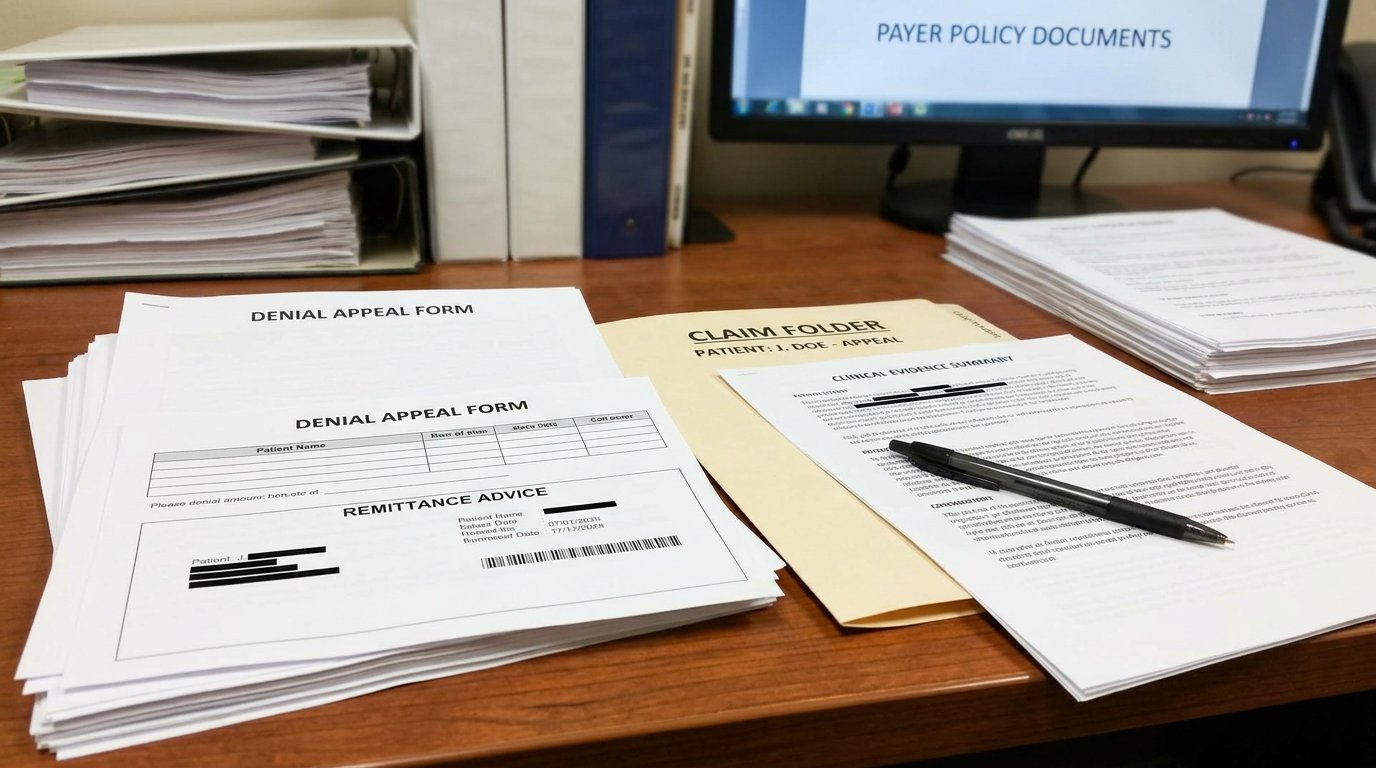
When you tighten your preauthorization workflows, automate claim scrubbing before submission, and track denials by payer, you directly reduce the revenue leakage that undermines your facility’s cash flow. Each of these billing workflow improvements targets a specific failure point, expired authorizations, preventable coding errors, and recurring payer-specific rejection patterns, that compounds into significant financial loss when left unaddressed. By building structured processes around these three areas, you can lower your denial rate, accelerate reimbursement timelines, and maintain tighter control over your revenue cycle.
Preauthorization Workflow Improvements
Because prior authorization failures rank among the top causes of claim denials in behavioral health, tightening your preauthorization workflow directly protects revenue and accelerates reimbursement cycles.
Implement these four process controls to reduce authorization-related denials:
- Maintain a current payer-service matrix so your scheduler verifies authorization requirements at booking, preventing unauthorized treatment.
- Assemble reviewer-ready packets containing all required clinical documentation before first submission, improving first-pass approval rates.
- Automate renewal alerts at T-14 days or 75% unit utilization to eliminate coverage gaps that trigger “no auth on file” denials.
- Track first-pass approval rates weekly to identify payer-specific bottlenecks and prioritize corrective actions.
Assign clear ownership at each step, intake, utilization management, billing QA, and clinical leads, so nothing falls through compliance gaps.
Automated Claim Scrubbing
Even a bulletproof preauthorization workflow can’t protect your revenue if claims ship out with coding errors, missing fields, or payer-rule violations. Automated claim scrubbing catches these issues before submission, running each claim through rule-based validation against national coding standards and payer-specific requirements.
Modern scrubbing tools combine RPA for data extraction with AI that detects anomalies rule-based logic misses. You’re looking at a 95% first-pass acceptance rate and up to 50% denial reduction when these systems are optimized.
For behavioral health specifically, you’ll need scrubbing configured for your payer mix, integrated with your EHR and clearinghouse. Prioritize validating CPT/ICD combinations, authorization expiration dates, and diagnosis-to-service alignment. Every clean claim that passes on first submission accelerates reimbursement and reduces costly rework cycles. Understanding the behavioral health claim processes is crucial for maintaining compliance and maximizing revenue.
Payer-Specific Denial Tracking
Each payer operates under its own denial logic, and if you’re not tracking those patterns individually, you’re leaving recoverable revenue on the table. Monthly denial audits segmented by payer reveal recurring rejection triggers that generic workflow adjustments can’t address.
Build a centralized system that captures:
- Payer-specific denial rates for medical necessity and authorization gaps
- Filing deadline variations, ranging from 90 to 180 days, with automated alerts
- Denial trends compared across locations, providers, and service lines
- Root cause data linking denials to specific coding or documentation deficiencies
This data drives targeted corrections and strengthens your position during reimbursement negotiations. You’ll also prevent timely filing denials from converting recoverable claims into permanent write-offs. Precision tracking protects your bottom line.
Track Financial Performance in Real Time to Stay on Target
Monitoring your facility’s financial performance in real time shifts your revenue cycle management from reactive to proactive. Implement customizable dashboards through platforms like PowerBI workspaces, and make them accessible to all stakeholders, not just leadership. Transparent visibility into critical KPIs enables your team to identify collection inefficiencies and payer contract issues before they erode your bottom line.
Target cash as a percentage of net revenue at 95% and track it monthly to spot seasonal variations and long-term payment trends. Monitor bill charge lag times closely, aiming for claims submission within 24, 48 hours of service delivery. Integrate clinical and financial data so managers can view patient open balances alongside demographic information. These metrics drive informed staffing adjustments and collection strategy refinements that protect your cash flow.
Focus on Patient Care, We’ll Handle the Billing
Revenue challenges should never distract you from the work that matters most. At Arise Billing Solutions, our experienced U.S.-based team manages your entire billing cycle with accuracy, transparency, and integrity. Call +1 (747) 256-6600 today and let us help you take control of your revenue.
Frequently Asked Questions
How Long Does It Typically Take to See Cash Flow Improvements After Implementing Changes?
You’ll typically notice initial improvements within weeks as reduced claim denials and faster eligibility verification take effect. Within 60-90 days, you’ll see measurable gains in clean claim rates and collection percentages. Full optimization results emerge within 3-6 months as workflows standardize across clinical and billing functions. Over the first year, you can expect a 20-30% cash flow improvement, with sustained refinement driving long-term financial stability.
What Software Platforms Work Best for Behavioral Health Revenue Cycle Management?
You’ll find platforms like BehaveHealth and Valant work best since they’re built specifically for behavioral health billing, handling unique CPT codes and telehealth documentation. For multi-location operations, CentralReach and Megadata BH offer enterprise-level reporting and location-by-location collection tracking. If you need strong denial prevention, OmniMD and Innovaccer Flow provide AI-driven analytics to catch issues before submission. Each platform’s ROI depends on your organization’s size and payer mix complexity.
How Should Facilities Handle Cash Flow Gaps During the Optimization Transition Period?
You should prioritize liquidity over debt by converting assets into cash quickly and establishing clear allocation priorities, payroll, rent, and clinical care come first. Implement real-time dashboards to monitor days in accounts receivable so you’ll catch shortage risks early. You’ll also want to accelerate deposits through lockbox services and clear aged claim backlogs immediately. These steps generate quick cash improvements while your broader optimization processes take hold.
What Credentials Should Billing Staff Have Specifically for Behavioral Health Claims Processing?
You’ll want billing staff who hold certifications like CPC (Certified Professional Coder), CCS (Certified Coding Specialist), or CCA (Certified Coding Associate). Beyond general credentials, they should demonstrate specialized knowledge in behavioral health CPT codes, ICD-10 mental health diagnoses, and payer-specific authorization requirements. You can’t overlook compliance training either, staff must understand HIPAA regulations and state-specific behavioral health billing rules. Prioritizing these qualifications directly reduces claim denials and strengthens your revenue cycle.
How Do Telehealth Services Impact Cash Flow Compared to Traditional In-Person Sessions?
Telehealth considerably improves your cash flow by cutting no-show rates to 4.4, 7.26% compared to 19, 22% for in-person psychiatry visits, creating more predictable revenue. You’ll reduce operating costs by eliminating physical space, utilities, and equipment expenses. Medicare’s extended telehealth flexibilities through 2027 stabilize your reimbursement pipeline, including audio-only services. Additionally, telehealth’s cost-offset effect, reducing emergency and inpatient utilization, keeps your total healthcare expenditures neutral while expanding billable service volume.