



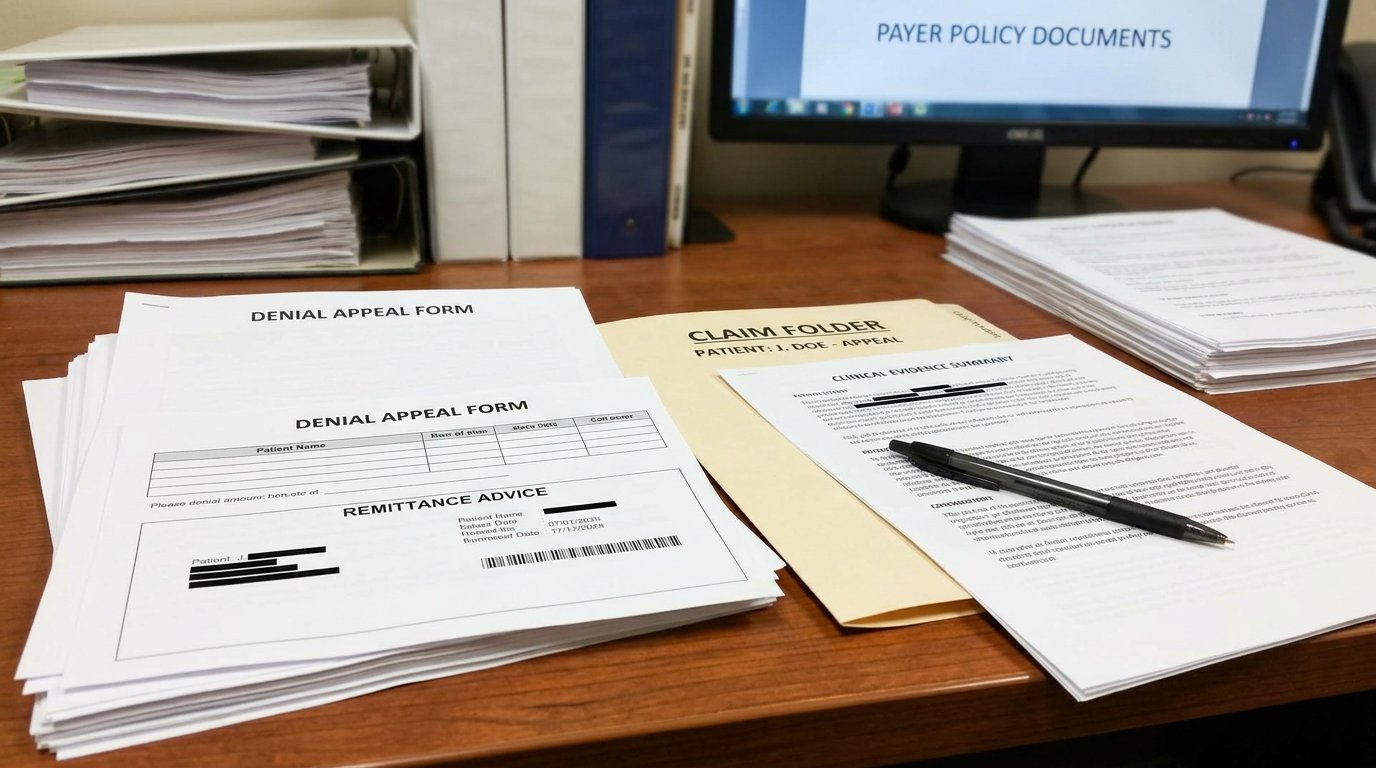


Payers evaluate every behavioral health claim against specific documentation standards, and gaps get flagged fast. You’ll need to demonstrate medical necessity by linking your diagnosis to active symptoms, functional impairment, and measurable treatment goals. Each note must justify the service’s current intensity, match the correct CPT and ICD-10 codes, and reference your treatment plan. Pre-authorization requirements must also be verified before sessions. Understanding exactly what triggers denials can help you build a claim process that holds up every time.
What Do Payers Look for in Behavioral Health Claims?

Your medical necessity documentation mental health claims depend on must show functional impairment across daily domains like work, relationships, and self-care. Payers flag vague language immediately. You need concrete, measurable evidence of progress toward treatment goals, and when progress stalls, you need documented clinical reasoning explaining why continued treatment remains necessary. Documentation must also precisely align with ICD-10 and DSM-5 codes to satisfy payer requirements and avoid claim denials.
Check Pre-Authorization Rules Before Every Session
Because pre-authorization requirements differ across payers, plan types, and service categories, you can’t assume yesterday’s rules apply to today’s session. Verify eligibility and enrollment before each date of service, skipping this step triggers automatic denials.
Some plans require authorization only after therapy sessions exceed annual limits. Others mandate pre-approval for psychological assessments, specific medications, or unlisted codes with charges exceeding $250. You’ll find these thresholds in each payer’s provider manual. If your claim is denied, knowing how to file a health claim appeal can be incredibly beneficial. It’s essential to gather all relevant documentation, including the initial claim and any communication with the insurance provider.
Submit authorization requests with thorough clinical justification, including diagnosis, treatment plan, and objective information aligned with LOCUS/ASAM frameworks. Missing this documentation causes documentation denials behavioral health providers can’t afford. Use electronic portals for faster processing, and submit before payer-specific daily cutoffs. Track every pre-authorization requirement systematically to prevent preventable revenue loss. Ultimately, authorizations function as gatekeepers in the billing process, ensuring that proposed services meet medical necessity standards and fall within the patient’s coverage before care is delivered.
Document Medical Necessity for Behavioral Health Services

Every behavioral health claim hinges on one question: does the documentation prove the service was medically necessary? You must connect the patient’s diagnosis directly to active symptoms, functional impairment, and the specific interventions delivered. Vague clinical language won’t survive a payer review. The clean claim rate explained in billing is critical for ensuring timely reimbursement. A higher clean claim rate not only reduces administrative costs but also enhances relationships with payers.
Your behavioral health documentation requirements demand that each note articulates why this patient needs this service at this intensity right now. Document face-to-face time, screening results, and mental status findings that substantiate the billed code. Every session note must reference the treatment plan, indicating whether the client is progressing, plateauing, or regressing, and provide clinical rationale for continued treatment if progress has stalled.
Your treatment plan billing requirements tie directly to medical necessity. Plans must include measurable goals, evidence-based interventions, and the patient’s response to treatment. If your notes say “stable” while claims bill continued intensive services, you’ve created an audit target.
Avoid Coding Mistakes That Trigger Denials and Audits
When coding errors appear on behavioral health claims, they don’t just trigger denials, they flag your practice for audits that can unravel months of reimbursement. Billing individual therapy codes for group sessions is a common violation that CMS actively targets. You must match every CPT code to the exact service delivered, upcoding without clinical justification invites scrutiny. To thrive in this competitive landscape, practices must adopt strategies that prioritize compliance while seeking to maximize revenue in behavioral healthcare.
Your clinical documentation billing behavioral health processes should guarantee group therapy notes include patient-specific responses in each attendee’s record. Progress note requirements billing compliance demands that every note documents symptoms, interventions, time, and clinical justification supporting the code submitted.
Pre-authorization failures and missing consent documentation compound coding problems. Self-audit regularly, verify code accuracy before submission, and ensure documentation and billing reflect identical service details.
Build an Audit-Ready Behavioral Health Documentation System
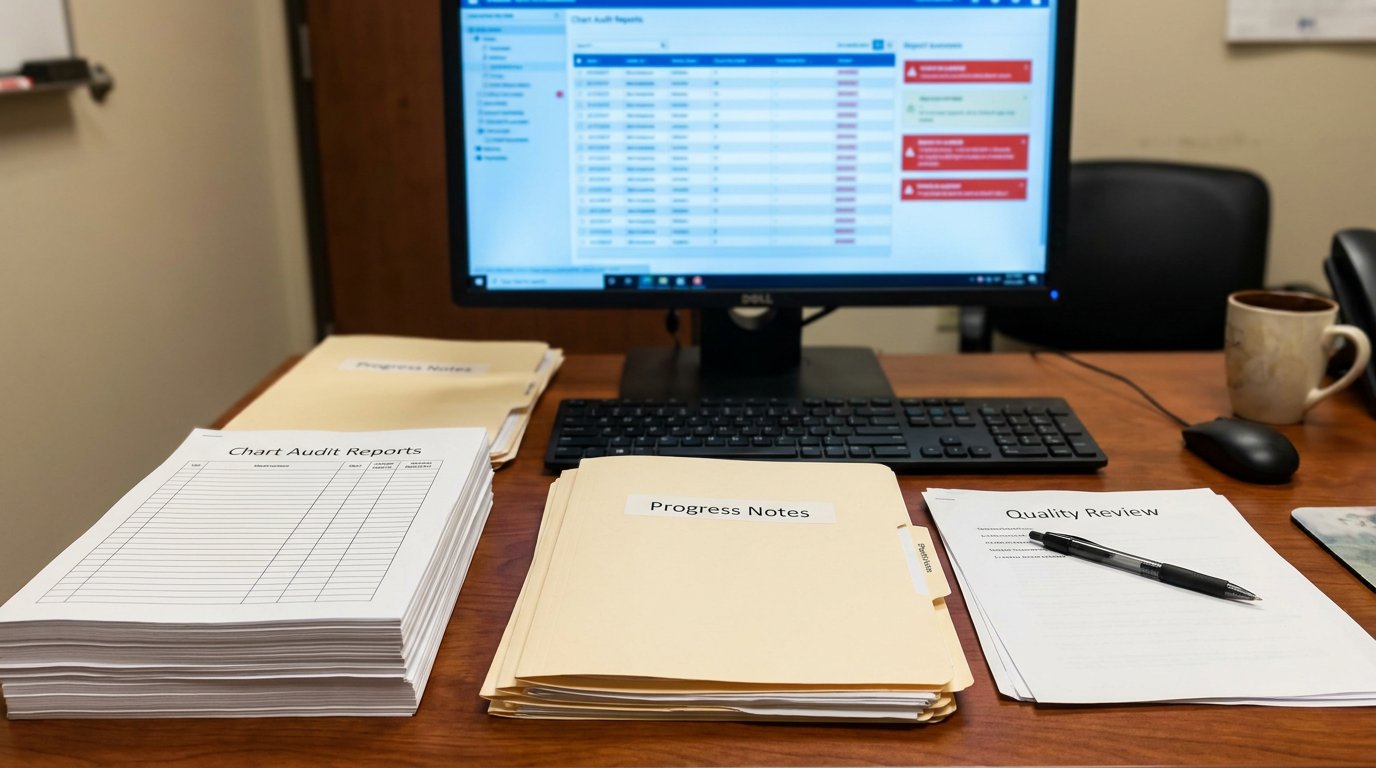
Catching coding errors before submission solves one problem, but surviving an actual audit requires a system that produces defensible documentation every time, not just when someone’s paying attention.
You need structured chart audit processes using statistically valid sampling methods. Review for diagnosis-treatment plan alignment, measurable objectives, and progress notes that tie directly to the plan of care. Your behavioral health billing documentation must withstand line-by-line scrutiny, every session duration, every suicide risk screening, every individualized group therapy note.
Deploy real-time compliance monitoring with percentage-based tracking of note timeliness and automated escalation chains for overdue items. Run internal audit simulations regularly. Use EHR-integrated quality dashboards that flag gaps before a payer’s auditor finds them. Build the system once; enforce it continuously.
Call Now and Simplify Your Billing Process
Revenue challenges should never distract you from the work that matters most. At Arise Billing Solutions, our experienced U.S.-based team manages your entire billing cycle with accuracy, transparency, and integrity. Call +1 (747) 256-6600 today and let us help you take control of your revenue.
Frequently Asked Questions
How Long Must Behavioral Health Documentation Be Retained for Payer Audits?
You must retain behavioral health documentation for a minimum of six years from the date of service or final payment under federal Medicaid and HIPAA requirements. However, you should follow the “longest rule wins” policy, if your state, payer contract, or accreditation body requires longer retention, that stricter timeline applies. You’ll also need to keep all records until any audit’s complete, appeals are exhausted, and final payment determinations are made.
Can Billing Staff Correct Documentation Errors After a Claim Is Submitted?
You can correct documentation errors after submitting a claim, but you must follow payer-specific rules carefully. Start by reviewing the denial notice, identifying the exact error, and gathering corrected or supporting documentation. You’ll need to resubmit within the payer’s designated timeframe, typically 30 to 90 days. However, certain errors, like expired authorizations, may require new approvals before resubmission. Non-compliant corrections risk permanent denials or audit triggers.
What Happens if a Therapist Forgets to Sign a Progress Note?
If you forget to sign a progress note, you’re triggering an automatic claim denial. Payers enforce signature mandates strictly, they can’t verify your identity or authenticate the service without it. Beyond billing, unsigned notes expose you to licensing board discipline, legal credibility issues, and HIPAA violations. You’ll need to resubmit with the signature, which delays payment and increases administrative costs. Don’t let this preventable error compromise your compliance standing.
Are Telehealth Documentation Requirements Different From In-Person Session Requirements?
You’ll document the same core elements, history, assessment, diagnoses, treatment plan, and medical necessity, but telehealth adds specific requirements. You must record the patient’s location, the communication method used, start and end times for time-based billing, all participants’ names and roles, and patient consent. You’ll also need the correct place of service code and documentation supporting HIPAA-compliant technology. Missing these details invites audit scrutiny.
Who Is Financially Liable When Documentation Deficiencies Lead to Claim Recoupments?
You, as the billing provider, hold primary financial liability when documentation deficiencies trigger claim recoupments. You’re responsible for ensuring all progress notes, treatment plans, consents, and supporting records meet payer-specific requirements before submitting claims. If you’re billing for services delivered by contracted personnel or community-based organizations, their documentation shortfalls still fall under your accountability. You must verify completeness, accuracy, and compliance across every claim to avoid recoupment exposure.