


Auditors target your documentation gaps, coding inconsistencies, and medical necessity failures first. They’ll flag upcoding (like billing 90837 when only 90834 is supported), cloned notes, missing suicide risk screenings, and treatment plans that don’t align with billed services. To stay protected, you’ll need clean claim rates above 95%, scheduled internal audits, and airtight alignment between clinical documentation, coding, and credentialing. Below, you’ll find exactly how to build that compliance framework step by step.
What Addiction Billing Auditors Look For

Auditors reviewing addiction treatment billing don’t conduct random searches, they follow specific patterns of risk. They target documentation deficiencies, medical necessity gaps, billing pattern anomalies, and claims for services never rendered. Your facility’s exposure depends on how well your records withstand that level of scrutiny.
In billing compliance addiction treatment reviews, auditors flag vague clinical notes, missing suicide risk screenings, and treatment plans misaligned with billed services. They examine high volumes of specific CPT codes, frequent claim adjustments, and modifier overuse, all signals of weak internal controls. Under the CMS National Coverage Policy, services reported must match those ordered by the physician, meaning incidental findings not ordered by the physician are not covered and will be flagged during audit review.
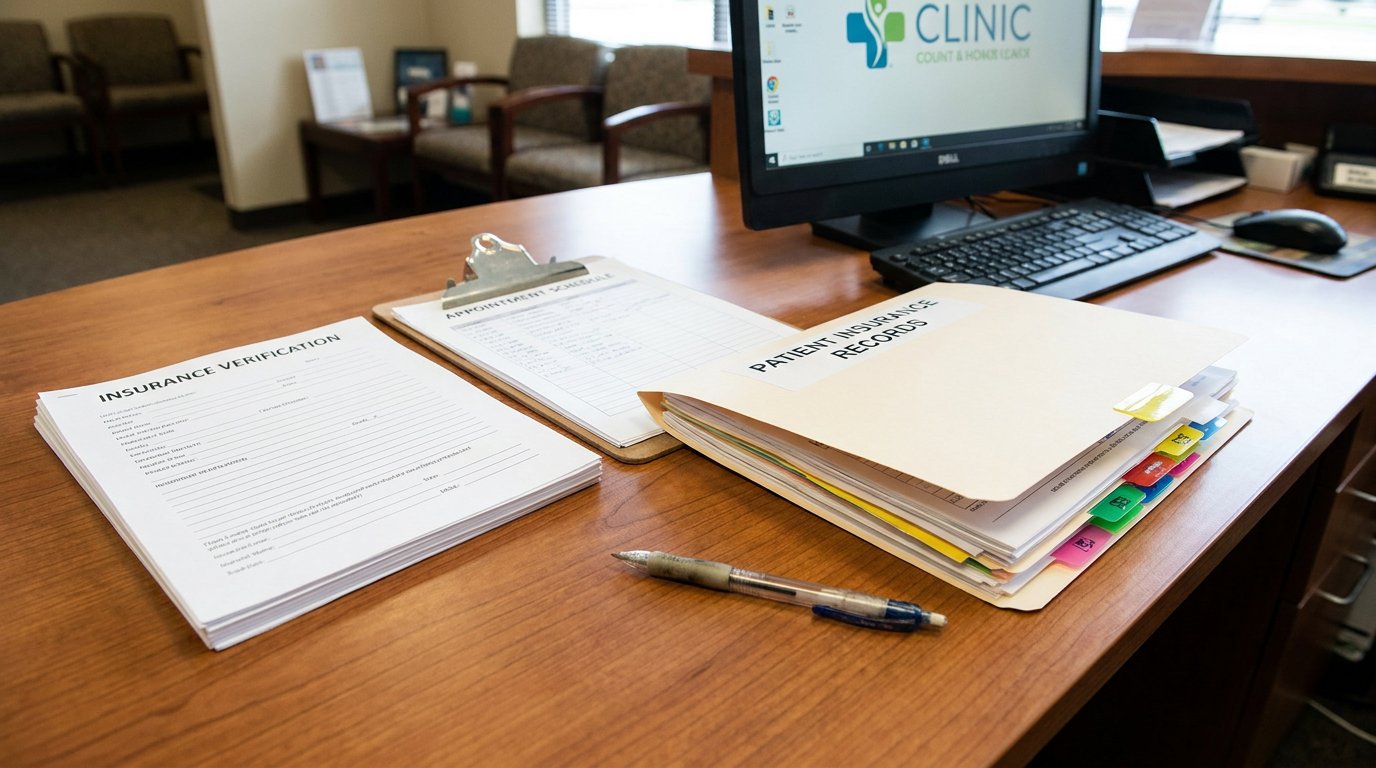
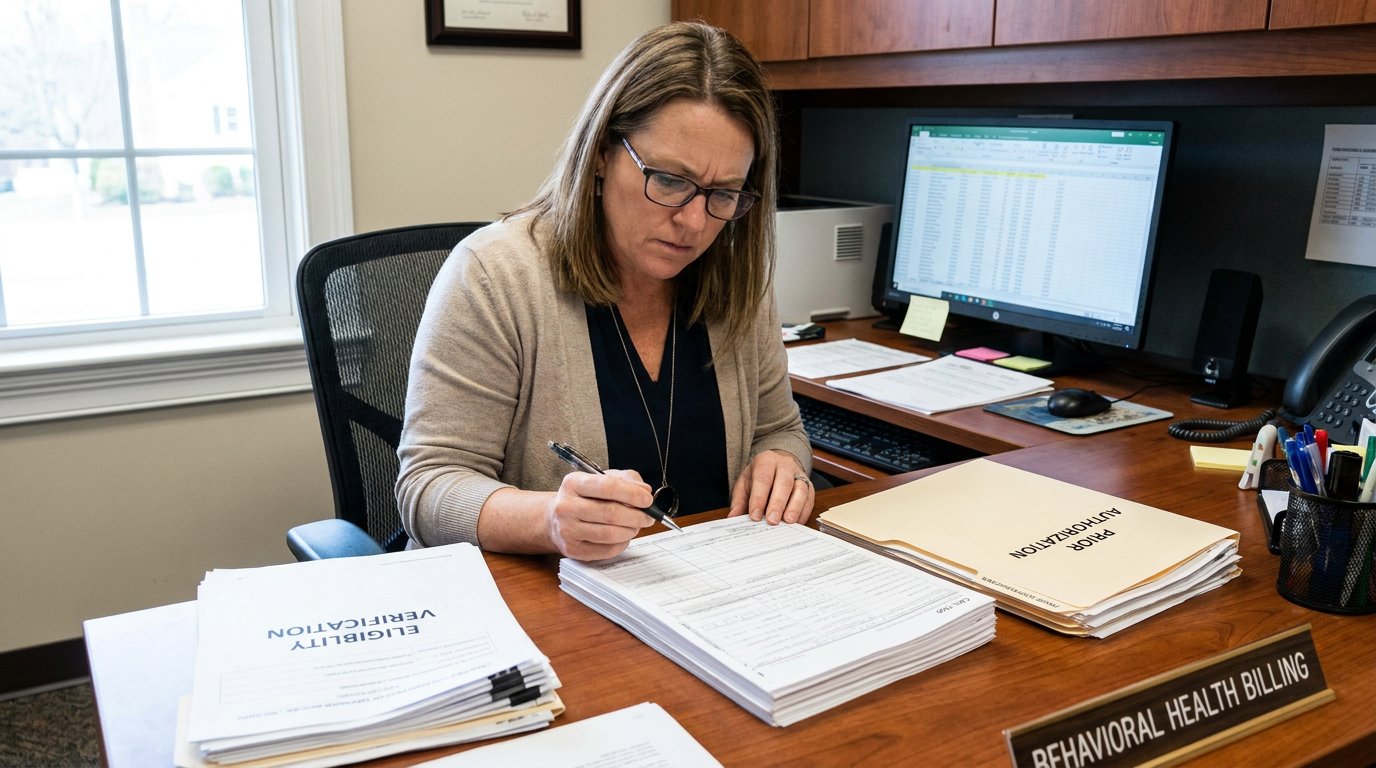
For effective billing fraud prevention behavioral health facilities must guarantee every claim ties directly to verified documentation, confirmed eligibility, and secured prior authorizations. Without that alignment, you’re generating audit triggers with every submission.
Coding Errors That Trigger Addiction Billing Audits
Even when a facility’s clinical team delivers appropriate care, coding errors at the billing stage can independently generate audit exposure that puts the entire operation at risk. Upcoding, billing 90837 when session time supports only 90834, remains one of the fastest ways to trigger an addiction treatment billing audit. Downcoding carries its own risks, signaling weak oversight to payers reviewing utilization patterns. Unbundling bundled services, submitting duplicate claims, and misapplying modifiers like 59 or omitting modifier 25 all create flags that escalate routine reviews into full-scale investigations. Payers now use analytics to detect cloned notes and repetitive coding patterns, meaning identical documentation across patients can independently escalate scrutiny even when individual claims appear compliant. Your behavioral health compliance program must include automated coding checks, regular internal audits, and staff training that addresses time-based documentation thresholds, sequencing rules, and payer-specific bundling requirements. These aren’t administrative preferences, they’re direct audit prevention measures.
Documentation That Proves Medical Necessity for SUD

Correct codes mean nothing if the underlying documentation doesn’t support medical necessity for the billed level of care. You need a DSM-5 diagnosis documented by your medical director or LPHA, a multidimensional level-of-care assessment completed within 72 hours of admission, and a physical exam documented within 30 days. Without these, your billing compliance mental health claims fail on review.
Your treatment plan must include target dates, counseling frequency, diagnosis, and primary therapist assignment within 30 days of admission. ASAM criteria must justify the level of care, with the LPHA’s printed name on the assessment form. For addiction treatment regulatory compliance, every continued stay request requires documentation from the last seven days, MD/RN notes, symptoms, functional impairments, and attendance records. Missing any element creates audit exposure. When submitting prior authorization requests to payers like Superior HealthPlan, ensure that all clinical submissions include information on prognosis and treatment plan justification, as incomplete records are a leading cause of denials and downstream billing vulnerabilities.
Build an Audit-Proof Addiction Billing Program
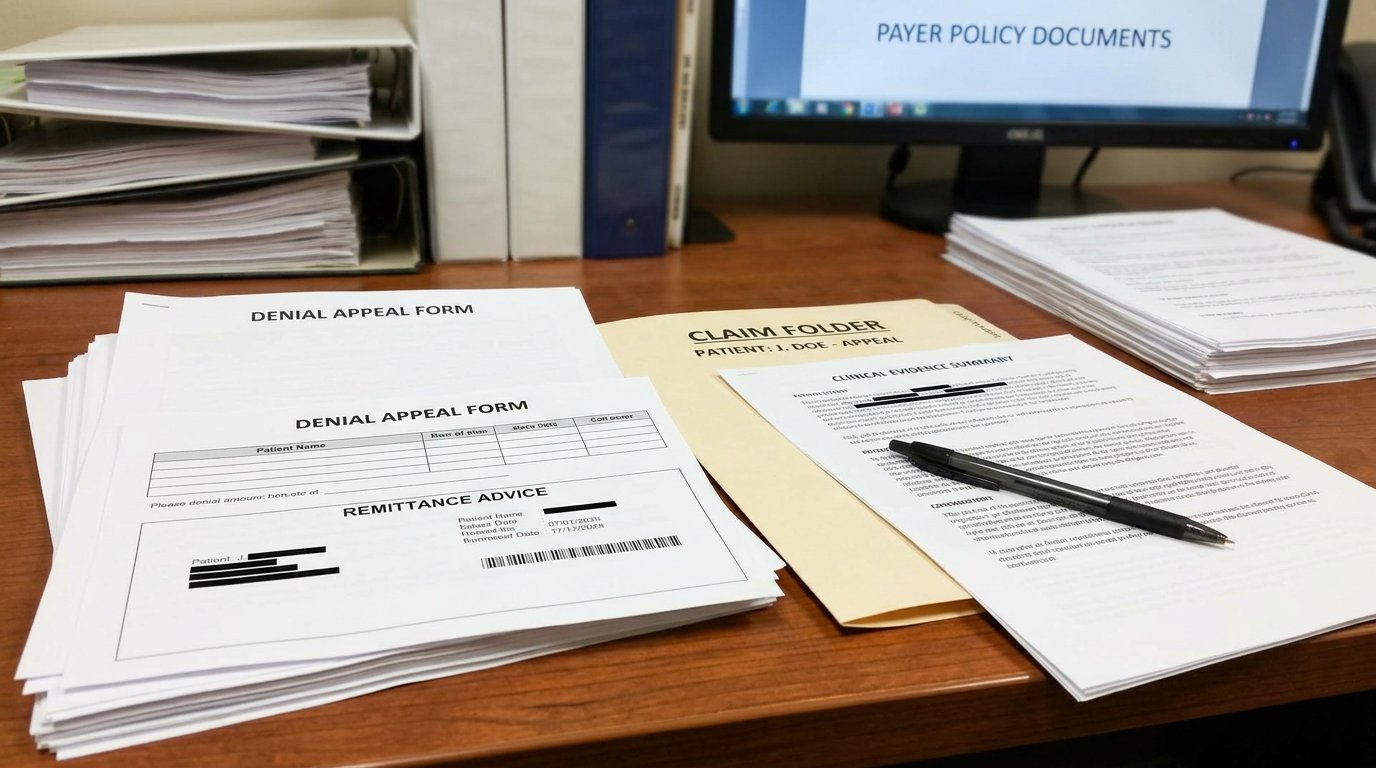
Your compliance program behavioral health infrastructure should include claim-scrubbing protocols targeting clean claim rates at or above 95%, internal audit schedules with documented findings, staff training logs with dated competency verification, and denial management workflows that track resolution through resubmission. Revenue protection in behavioral health claims is essential to maintain financial stability within the organization.
Every payer audit addiction treatment facilities face examines whether coding, documentation, and credentialing align across the same claim. Build cross-functional accountability between clinical, billing, and credentialing teams so that no single claim contains mismatched data points auditors routinely flag. Medical record auditing benefits in behavioral health can lead to improved patient care and optimized resource allocation.
In-House vs. Outsourced Addiction Billing Compliance

Whether you manage billing compliance internally or outsource it to a specialized partner, the structural decision directly affects your facility’s audit exposure, error rates, and ability to respond to payer scrutiny under tight deadlines.
In-house teams offer real-time record access and direct clinical coordination but depend heavily on staff training quality. High turnover disrupts compliance continuity, increasing recoupment risk addiction treatment facilities can’t afford during an active review. The costs of missing deadlines in healthcare can be substantial, impacting not only financial stability but also patient outcomes. Facilities must prioritize efficient workflows to mitigate these risks and ensure compliance with regulatory requirements.
Outsourced partners bring systematized credentialing, behavioral health coding expertise, and regular regulatory updates, critical when responding to an OIG audit behavioral health investigation. However, you must verify vendor transparency and maintain performance oversight.
Evaluate your decision against billing complexity, denial rates, and whether your team can sustain clean claim rates above 97%.
Call Now and Simplify Your Billing Process
Revenue challenges should never distract you from the work that matters most. At Arise Billing Solutions, our experienced U.S.-based team manages your entire billing cycle with accuracy, transparency, and integrity. Call +1 (747) 256-6600 today and let us help you take control of your revenue.
Frequently Asked Questions
How Long Do Addiction Treatment Centers Need to Retain Billing Records?
You should retain billing records for at least six years under general Medicare and HIPAA requirements, but if you’re billing Medi-Cal or Medicare in California, you’ll need to keep them for ten years. For SUD-specific records governed by 42 CFR Part 2, you must retain them until all legal retention periods expire. Given fraud concealment risks, consider maintaining records for fifteen years to protect against delayed audits and recoupment demands.
Can a Facility Lose Its License Solely Due to Billing Violations?
It’s unlikely you’d lose your license solely from billing violations. Licensing boards typically combine billing issues with care quality or patient safety failures before pursuing revocation. However, billing violations can trigger investigations by agencies like California’s DHCS Licensing Division, and if those investigations uncover additional deficiencies, your license exposure increases considerably. You shouldn’t treat billing compliance as low-stakes, it’s often the thread that unravels broader enforcement actions.
What Happens if a Former Employee Reports Billing Fraud to Regulators?
If a former employee reports billing fraud, regulators or the DOJ can launch a formal investigation into your facility’s claims. Under the False Claims Act, that employee can file a qui tam lawsuit on the government’s behalf and receive a portion of any recovery, as seen in the Seabrook case, where the relator received over $3.5 million from a $19.75 million settlement. You’ll need complete, audit-ready documentation to defend against these claims.
Are Telehealth Addiction Services Audited Differently Than In-Person Treatment Billing?
Yes, auditors apply additional scrutiny to telehealth addiction services beyond standard in-person billing reviews. You’ll need to document telehealth-specific modifiers (GT or GQ), verify HIPAA-compliant platform usage, and confirm session duration independently. OTP services can’t use telehealth codes under Medicare’s definition, and audio-only visits require distinct G-codes (G2010, G2025). Poor telehealth documentation alone can trigger 10, 25% revenue loss, so you should maintain separate audit protocols for each delivery modality.
How Quickly Must a Facility Respond After Receiving a Payer Audit Notice?
Most determination letters give you up to 30 days to produce documentation. You should start preparing records immediately, many facilities lack centralized systems, which creates delays. If you need more time, request an extension from the payer; they’ll typically grant one. Missing your deadline risks overpayment demands based solely on late submission. After receiving an adverse determination, you’ll have 30, 120 days to file an appeal, depending on the payer.