



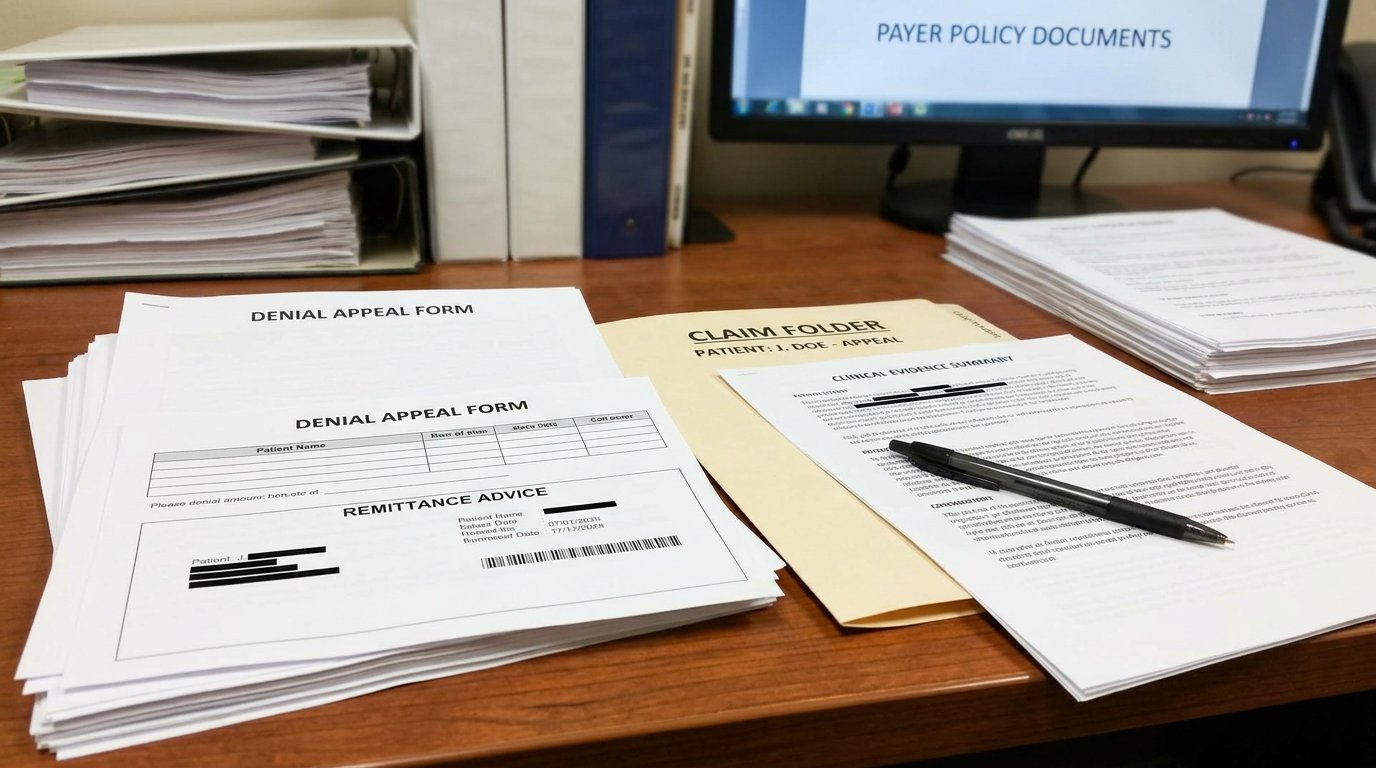


To get behavioral health prior authorizations approved faster, you’ll need to submit complete documentation, including ICD codes, psychiatric evaluations, and clinical rationale, at least five business days before the service start date. Run a pre-submission check against each payer’s specific medical necessity criteria, since most insurers carve out behavioral health to third-party administrators with separate requirements. Track submissions daily through online portals to catch information requests immediately. Below, you’ll find step-by-step strategies to streamline every stage of the process.
Why Does Behavioral Health Prior Authorization Take So Long?

Behavioral health prior authorization delays don’t stem from a single bottleneck, they result from compounding pressures across payers, providers, and the authorization process itself. You’re maneuvering rising request volumes, with practices averaging 39 prior authorizations weekly, each consuming roughly 24 minutes of staff time. When you multiply that across a year, the administrative drain is substantial.
Incomplete documentation triggers nearly 25% of initial denials, forcing resubmissions that stall patient access to care. Prior authorization behavioral health requests demand detailed clinical notes, treatment plans, and progress reports, and missing any component restarts the clock. Staff resource limitations compound the problem further. Your team likely spends 14 hours weekly managing authorizations alone, pulling focus directly from clinical operations and accelerating burnout across administrative staff. Adding to this complexity, behavioral health carve-outs force practices to navigate fragmented processes across multiple payers, each with different submission methods and documentation formats.
Why Behavioral Health Approvals Face Stricter Scrutiny Than Medical
Even when you submit identical levels of clinical documentation, behavioral health authorizations face carved-out administrative barriers that don’t apply to medical or surgical requests, separate review entities, different submission portals, and additional intake requirements that add friction before a reviewer even evaluates your case. Payers apply heightened medical necessity standards to behavioral health services, often using proprietary criteria that fall short of generally accepted clinical standards of care, which means your documentation must anticipate and directly address thresholds that are more restrictive than what the treating clinician would consider appropriate. You’re also working against shorter approval windows, with authorized units covering fewer days of treatment at a time, forcing your team into repeated concurrent review cycles that compound the administrative burden and increase the risk of coverage gaps. These disparities persist in part because historic public underinvestment in behavioral health has left the sector without the regulatory parity infrastructure needed to hold payers accountable to the same standards applied across medical specialties.
Carved-Out Administrative Barriers
Most payers don’t handle behavioral health authorizations in-house, they carve them out to third-party administrators like Optum Behavioral Health or Carelon Behavioral Health, and this single structural decision creates a fundamentally different authorization experience than what providers encounter on the medical side.
Each carve-out entity maintains separate portals, documentation standards, and clinical review criteria, meaning your payer authorization requirements shift depending on which administrator manages the behavioral benefit. This fragmentation directly complicates behavioral health auth management because you’re maneuvering duplicated oversight layers that don’t exist in integrated medical plans. The added administrative cost slows processing times and distorts treatment incentives, particularly favoring pharmacotherapy over therapy-based interventions. Research on safety-net health centers has shown that difficult-to-navigate phone trees, unanswered voicemails, and complex referral processes compound these structural obstacles, particularly for adolescents and caregivers seeking timely behavioral health access. These structural barriers lower your prior auth approval behavioral health rates, especially for less severe cases that lack clear specialty referral pathways.
Heightened Medical Necessity Standards
| Criteria Source | Application | Key Limitation |
|---|---|---|
| MCG Health | Evernorth mental health plans | Doesn’t cover all SUD levels |
| ASAM 3rd/4th Edition | Substance use disorder by age | Age-split complicates documentation |
| LOCUS/CALOCUS-CASII | State-specific mental health | Limited to CA, CO, NY adoption |
A critical prior auth tips behavioral health teams should follow: document against the *specific* criteria source your payer uses, not general clinical standards.
Shorter Approval Windows
Although federal parity laws technically require insurers to cover behavioral health on equal terms with medical services, payers consistently apply tighter authorization windows and more frequent review cycles to behavioral claims than to their medical counterparts. Commercial insurers like UnitedHealthcare enforce 72-hour initial authorization deadlines for psychiatric inpatient stays, significantly shorter than medical equivalents. Blue Cross plans classify behavioral services as “high-risk,” triggering peer-to-peer reviews in 40% of cases.
If you’re figuring out how to get prior authorization faster, you’ll need disciplined prior authorization follow-up systems that track expiration dates before units run out. For prior auth addiction treatment specifically, self-insured employer plans impose custom protocols varying 3, 7 days from medical standards, making proactive calendar management and payer-specific workflow tracking non-negotiable operational requirements.
Documentation That Gets Prior Authorization Approved Faster
Because payers evaluate prior authorization requests almost entirely on the strength of the submitted documentation, what you include, and how you frame it, directly determines whether a request gets approved on the first pass or triggers a cycle of additional information requests and delays.
Submit complete diagnosis details with current ICD codes, prior treatment history, and failed intervention documentation at initial submission, not during appeal. Attach psychiatric evaluation reports, objective assessment scores, and lab results upfront. Include the prescribing physician’s clinical rationale explaining why the requested treatment is medically necessary.
Your treatment plan should document specific behavioral health goals, expected outcomes, and functional impairment evidence showing how symptoms impact daily living. This targeted framing directly addresses payer medical necessity criteria and accelerates approval decisions.
Start Your Prior Authorization Early With Complete Records

When you initiate the prior authorization process immediately after establishing a treatment plan, rather than waiting until services are about to begin, you eliminate the most common source of reimbursement delays in behavioral health. Submit requests at least five business days before your desired service start date. For ODMHSAS, verify the requested start date falls within fifteen calendar days.
Your initial submission should include the detailed assessment report, diagnosis, clinical justification, and a treatment plan specifying service type, frequency, duration, and start and end dates. Attach the signed provider order attesting to medical necessity. Run a pre-submission check against the insurer’s requirements to confirm you’ve included every required element, incomplete requests trigger follow-up attempts and risk denial.
Use Online Portals to Track Prior Authorization Status
Most major payers now offer dedicated online portals where you can submit authorization requests electronically, attach clinical documentation, and monitor each request’s progress through real-time status updates without waiting on hold. You should check these portals daily to catch information requests, pending reviews, and approval decisions the moment they post, since delayed responses to payer inquiries are one of the most common reasons authorizations stall or get denied. When an authorization is approved, print or download the approval letter immediately and file it with the patient’s account so your billing team has the documentation they need to submit clean claims.
Portal Submission Best Practices
Although phone and fax submissions still exist as options, payer portals have become the primary channel for submitting, tracking, and managing prior authorization requests in behavioral health. Platforms like Availity, PartnershipHP, and Ambetter’s self-service tools let you submit TARs, upload clinical documentation, and monitor approval status from a single dashboard.
To maximize portal efficiency, follow these best practices:
- Complete all required fields before submission, incomplete entries trigger automatic rejections and delay processing timelines.
- Upload clinical documents evaluating medical necessity alongside every authorization request, including treatment plans and psychological history.
- Use portal filters to track prior auth history by member or service type, reconciling remittance data against submitted requests.
Consistent portal use reduces administrative rework and creates an auditable submission trail for compliance purposes.
Real-Time Status Tracking
Submitting a prior authorization request through a portal is only half the process, you also need to track its status in real time to catch delays, denials, or pending documentation requests before they disrupt reimbursement. Platforms like Availity AuthAI deliver status updates in under 90 seconds when clinical data is included, while Surescripts’ ePA workflow returns average approvals in under four minutes.
UHC’s provider portal supports API-based status checks for instant tracking across case types. Blueprint’s portal displays current authorization statuses without requiring phone calls, integrating directly into existing provider workflows. Cohere Health embeds real-time audit trails within EHR systems.
These tools eliminate manual follow-up calls and reduce administrative lag. You should configure automated alerts for status changes so your team can respond immediately to payer requests or adverse decisions.
Print Approval Letters Instantly
Once a payer approves a prior authorization request, you need the approval letter in hand, not stuck in a queue or buried in a fax pile. Most payer portals let you download or print approval documentation immediately after a decision posts, eliminating delays that can hold up treatment starts or billing workflows.
Key portal capabilities for instant documentation access:
- UnitedHealthcare’s portal provides real-time status updates, so you can pull approval letters the moment decisions are rendered
- Availity Essentials lets you review and retrieve authorization decisions across multiple health plans from a single dashboard
- PA Provider Portal sends email alerts on submissions, enabling you to access approval documentation as soon as it’s available
Print and file every approval letter immediately. Attach it to the patient’s billing record to support clean claim submission.
Know Your Payer’s Prior Authorization Criteria Before You Submit
How often do authorization requests get denied simply because the submitting team didn’t check what the payer actually requires? Each payer maintains distinct criteria, different documentation formats, clinical thresholds, and submission channels. Non-contracted providers always require prior authorization regardless of medical necessity. All unlisted codes exceeding $250 demand it. Medicare mandates it for inpatient and outpatient substance use disorder treatment.
You need to know the specifics before you submit. For partial hospitalization, some payers require LOCUS composite scores between 14-16. Others want CIWA/COWS scores, MAT/detox taper details, and prior treatment history. Use electronic portals like JIVA or Provider Express where available to expedite processing. Regularly review payer-specific policy updates and train your staff on every change to prevent avoidable denials.
How ABA Therapy Prior Authorization Works Step by Step

ABA therapy prior authorization follows a structured, multi-step process that demands precision at every stage, from initial insurance verification through ongoing reauthorization cycles.
Before submitting any request, you’ll need to confirm network coverage, identify plan-specific authorization requirements, and verify provider credentialing status. Once verified, your clinical package must include:
Before submitting a prior authorization request, always verify network coverage, plan requirements, and provider credentialing status first.
- ASD diagnostic report from a qualified professional using DSM-5 and ICD-10 coding standards
- Functional Behavior Assessment documenting behavioral baselines and skills gaps
- Individualized treatment plan detailing recommended hours, session frequency, and medical necessity justification
Submit all documentation using insurer-specific authorization forms. Standard processing takes 7, 14 business days, though complex cases extend to six weeks. Insurers typically authorize six-month intervals, requiring reauthorization with updated assessments approximately five months into each cycle.
Legal Rules That Can Remove Prior Authorization Barriers
While prior authorization remains the default gatekeeping mechanism for most behavioral health services, a growing body of federal and state laws now limits when and how payers can impose these requirements, particularly for mental health, substance use disorder treatment, and ABA therapy.
Federal parity rules under MHPAEA prohibit plans from applying stricter prior authorization requirements to mental health and substance use disorder benefits than they apply to medical/surgical benefits. You can request compliance documentation as an authorized representative when claims are denied.
At the state level, Illinois’s HB 3019 bans prior authorization for medically necessary outpatient mental health services effective January 1, 2026. Twenty-two states now restrict prior authorization for opioid use disorder medications, with seven imposing complete bans across all OUD medication classes.
Build a Follow-Up System So Authorizations Never Lapse
Even when parity laws and state-level reforms remove prior authorization barriers for certain services, the vast majority of behavioral health treatments still require active authorization management, and a single lapsed authorization can turn days or weeks of billable services into unrecoverable write-offs. The PHP and IOP authorization process can be complex and often requires consistent monitoring. Effective communication between providers and payers is essential to prevent any lapses.
Implement automated tracking tools that monitor every authorization’s status in real time. Your system should:
- Flag expiring authorizations before units run out, triggering extension requests with enough lead time to avoid gaps
- Log approval numbers, dates, and payer notes directly into the EHR to eliminate manual entry errors
- Send daily reports identifying pending authorizations requiring follow-up action
Assign designated staff as points of contact for each payer. They’ll own submission timelines, track payer response times, and escalate stalled requests before coverage lapses.
Call Now and Simplify Your Billing Process
Revenue challenges should never distract you from the work that matters most. At Arise Billing Solutions, our experienced U.S.-based team manages your entire billing cycle with accuracy, transparency, and integrity. Call +1 (747) 256-6600 today and let us help you take control of your revenue.
Frequently Asked Questions
What Happens Financially if a Provider Delivers Services Before Authorization Is Obtained?
If you deliver services before obtaining authorization, you risk non-reimbursement from the payer, meaning you’ll absorb the full cost of care provided. Denied claims increase your administrative burden, requiring staff time and resources to appeal or resolve billing issues. This disrupts your cash flow, delays revenue, and strains your financial margins. Smaller practices feel this impact most acutely. You should always secure authorization first, unless the service qualifies as an emergency under the No Surprises Act.
Can Patients Appeal a Denied Prior Authorization for Behavioral Health Services?
Yes, you can appeal a denied prior authorization. You’ll typically need to file an internal appeal within 30, 60 days of receiving the denial notice. To strengthen your case, include detailed clinical documentation, diagnostic assessments with DSM-5 criteria, symptom severity records, functional impairment examples, and a letter of medical necessity from your provider. Over 83% of appealed behavioral health denials are partially or fully overturned, so pursuing the process is well worth the effort.
How Do “Gold Card” Waiver Programs Work for Behavioral Health Providers?
Gold card programs waive prior authorization for providers who consistently meet evidence-based treatment guidelines. UnitedHealthcare’s program, managed through Optum, evaluates your practice’s prior authorization history by TIN. If you qualify, you’ll skip clinical prior authorization for select procedure codes covering intensive outpatient, partial hospitalization, psychological testing, and substance use disorder services. You’ll still need to submit an Advance Notification through Provider Express, claims without it won’t be paid.
Who Is Responsible for Obtaining Prior Authorization, the Provider or the Patient?
You’re responsible as the provider for obtaining prior authorization, not the patient. Your ordering physician or nurse practitioner determines when authorization’s needed, and your administrative team submits the request with supporting clinical documentation to the payer. You’ll need to demonstrate medical necessity, including failed alternatives or side effects, using the payer’s specific criteria. Your electronic medical record system should link directly with insurers to streamline PA checks and submissions throughout the process.
How Does Prior Authorization Differ Between Commercial Insurance and Medicare Behavioral Health?
Commercial insurers and Medicare Advantage plans require extensive prior authorization for behavioral health services, but traditional Medicare rarely does, relying instead on retrospective claim denials. You’ll find that Medicare Advantage plans apply prior authorization for 99% of enrollees for some services, while commercial payer requirements vary widely by insurer. You should also know that MHPAEA requires commercial plans to justify prior authorization parity between behavioral health and medical services.